In this first year, as an experiment, we trapped for grey long-eared bats in their typical habitat close to known records.
After several nights trapping we were successful in mid August, when three grey long-eared were caught, and two of them fitted with radio tags for tracking.
Reports from all the nights trapping below:
- Trapping 1 – 17/18 May – Montacute
- Trapping 2 – 31 May/1June – Montacute and Tintinhill
- Trapping 3 – 2/3 August – Exmoor, Dunster and Holnicote
- Trapping 4 – 16/17 August – Highbridge and Kewstoke
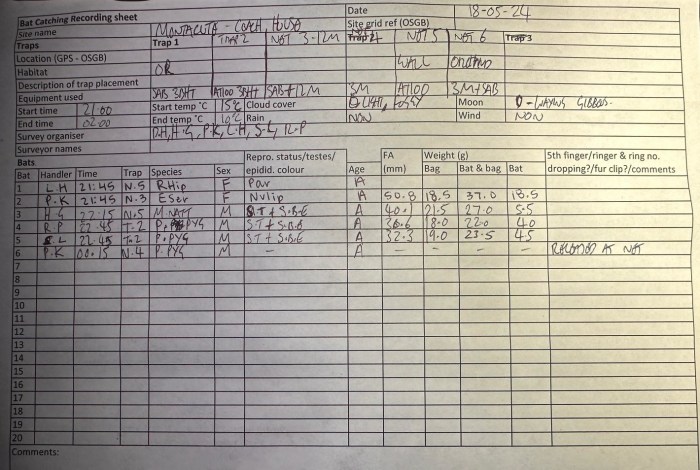
Trapping Session 1 – 17/18th May
Our first weekend test trapping was at National Trust’s Montacute House. While bats were caught, there were no GLE, and no bats tagged. So obviously there was no radio tracking the following week. As our chair Paul said “this is a bit of an experiment”, so we will try for GLE again soon.
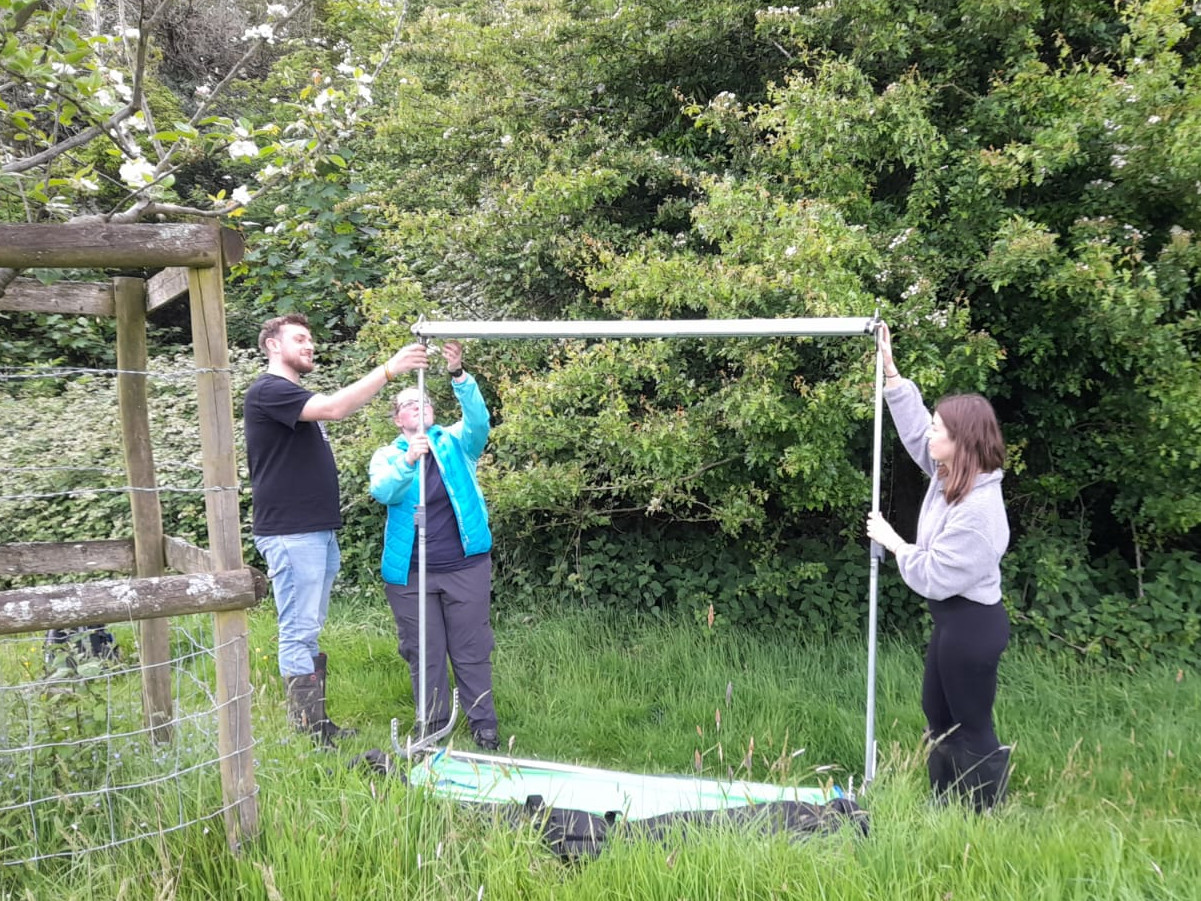
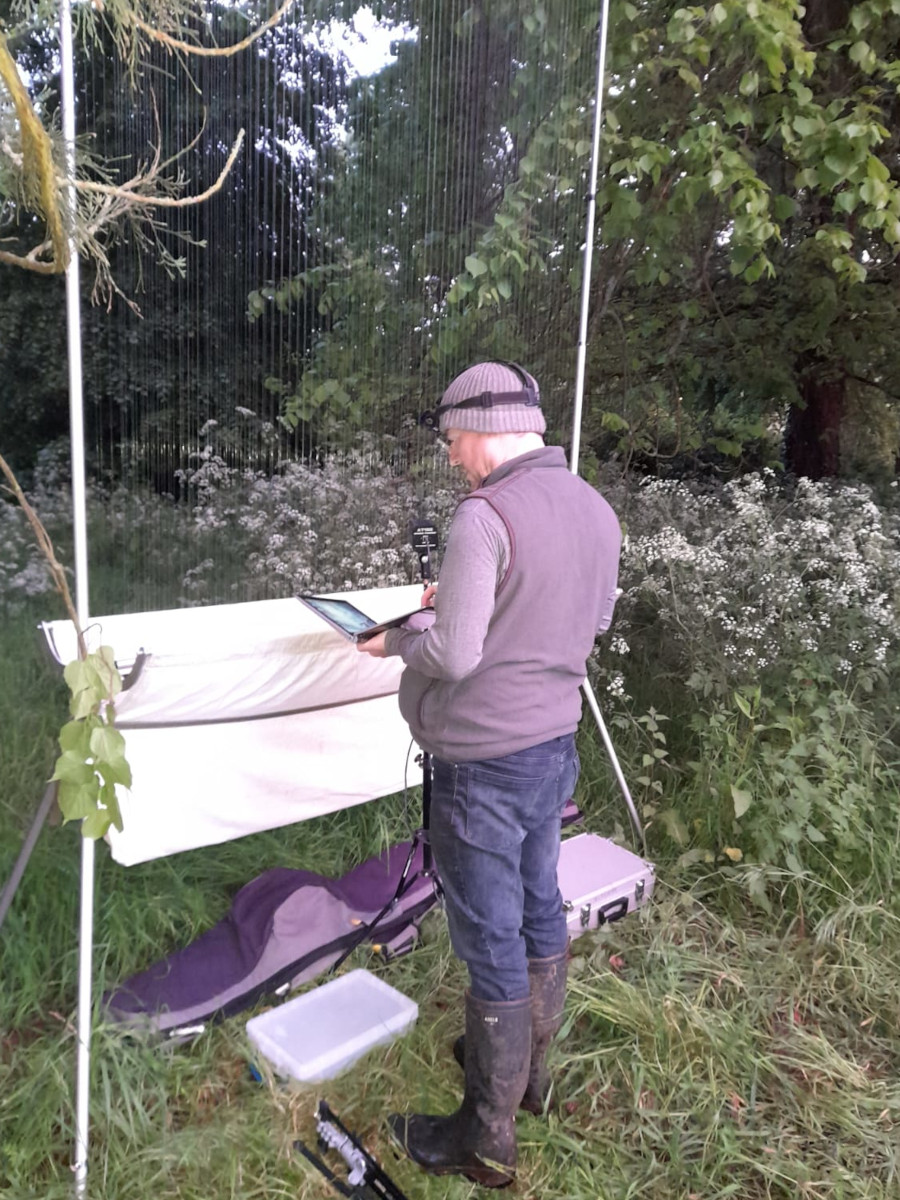
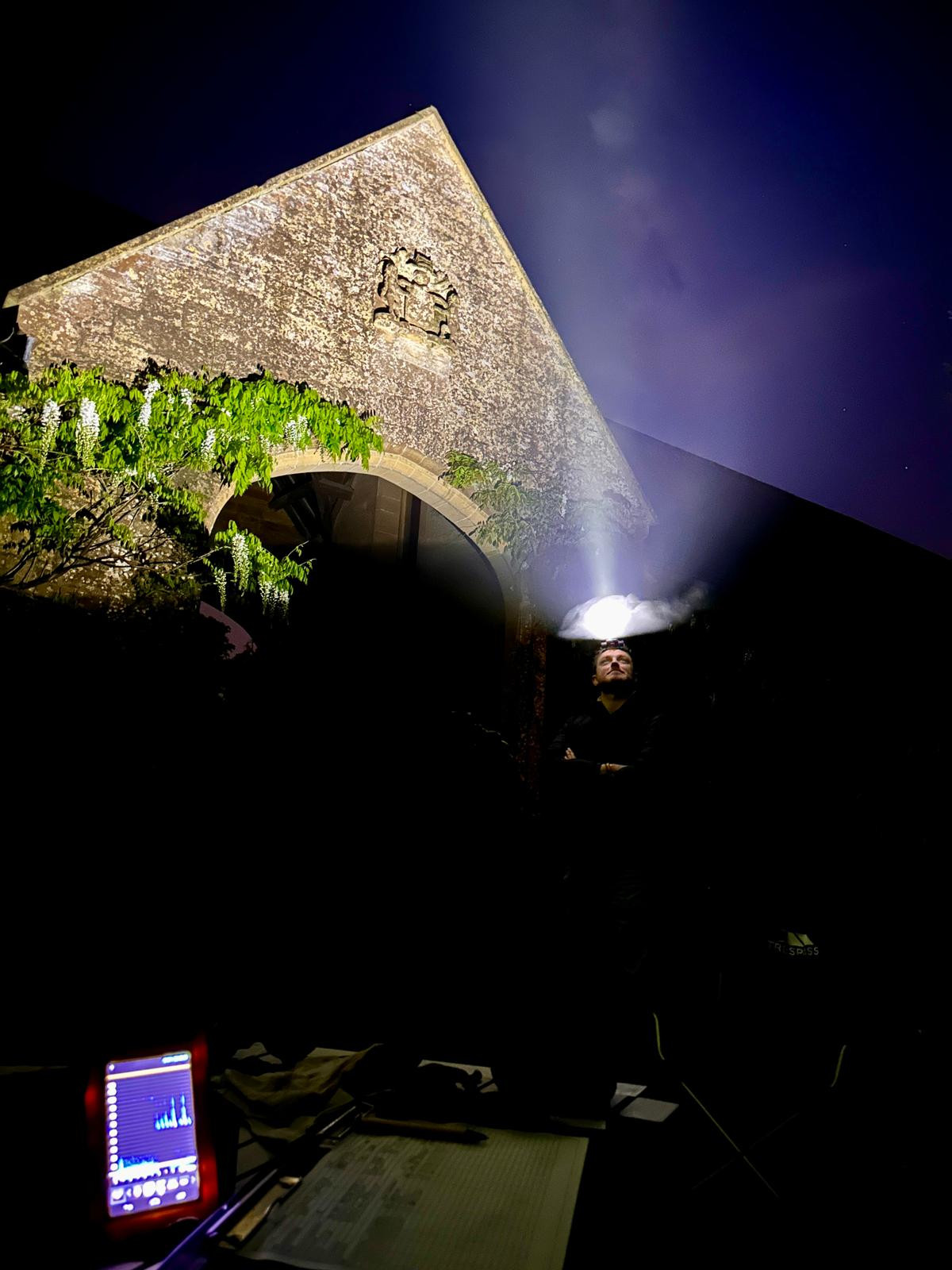
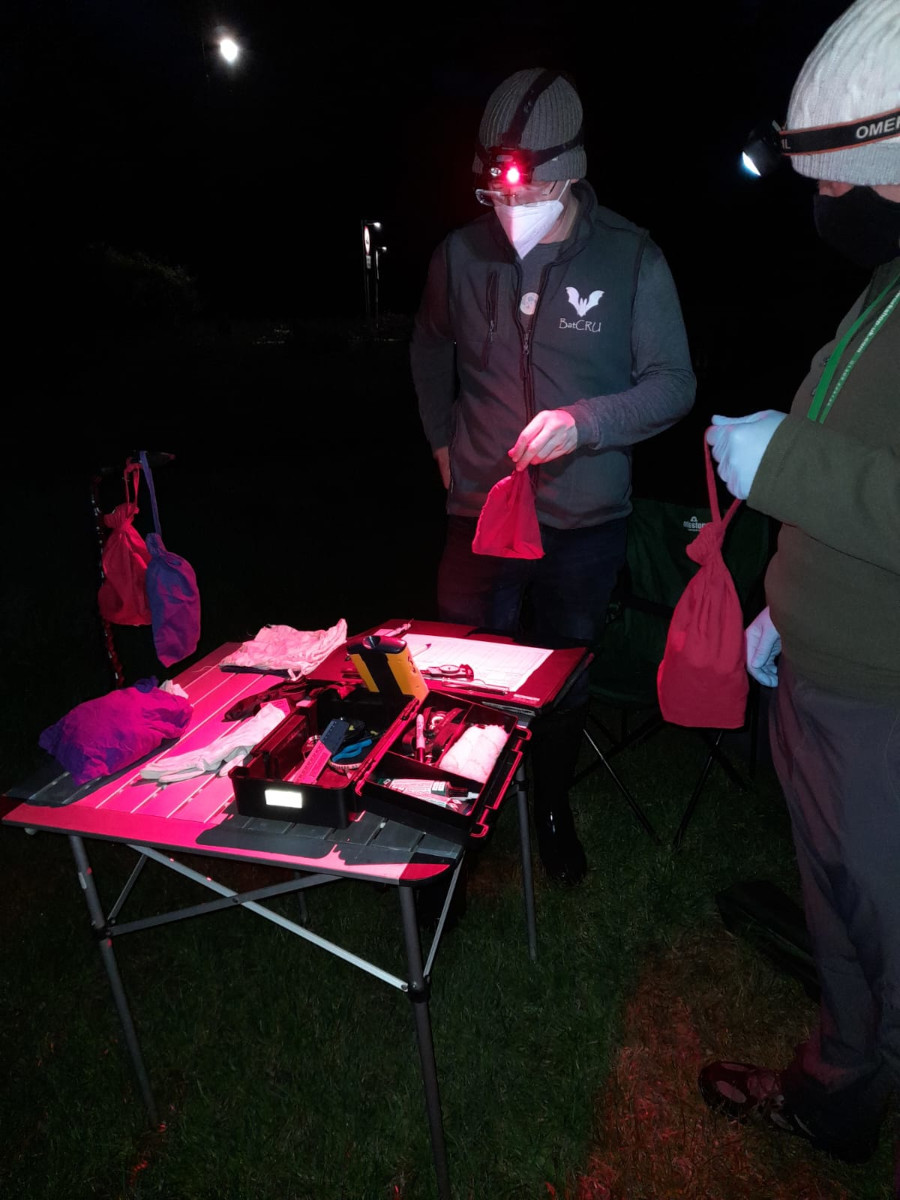
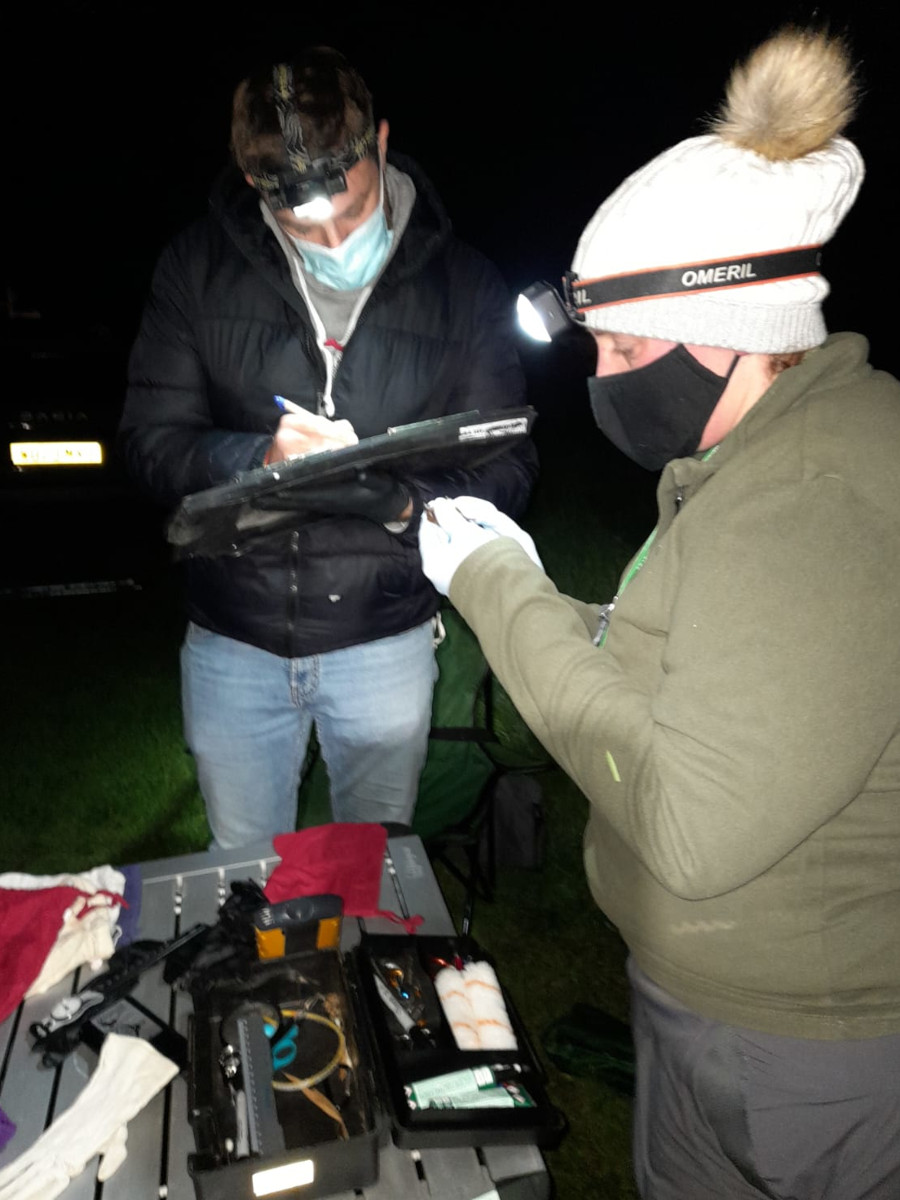
Montacute was chosen as the first site, as a GLE had been taken into care from there a few years ago, and Daniel radio tracked it on its release. Hence he had some familiarity with the GLE there.
The most experienced trappers, those with their own trapping kit, were invited, so Daniel could brief them on the project and trapping protocols.
At least six traps were deployed with a central processing station:
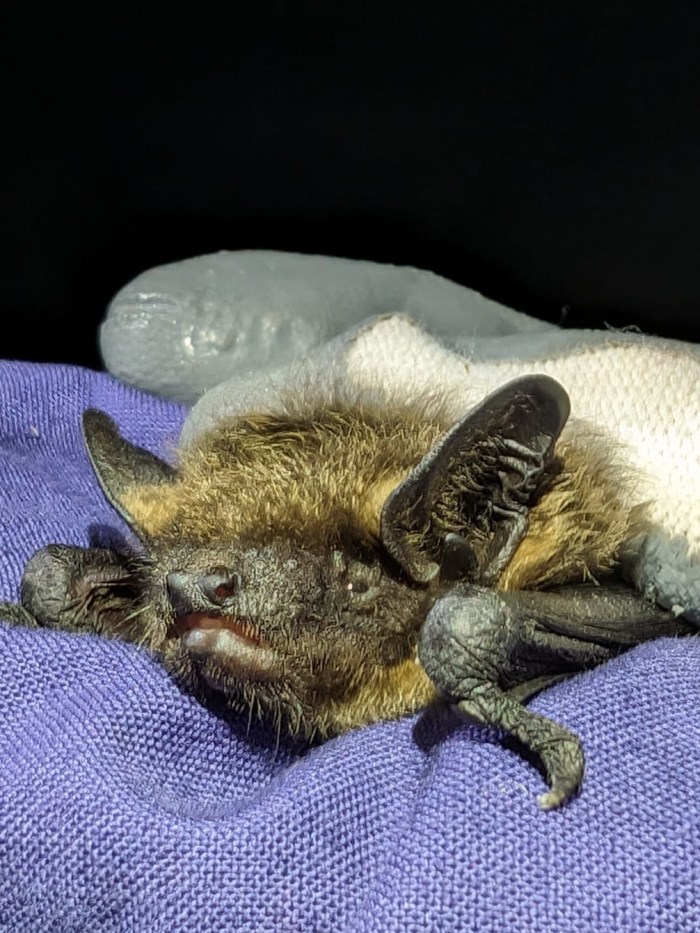
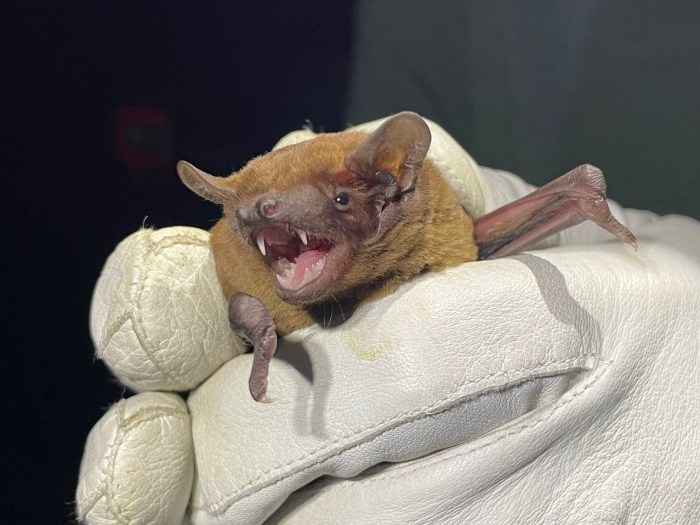
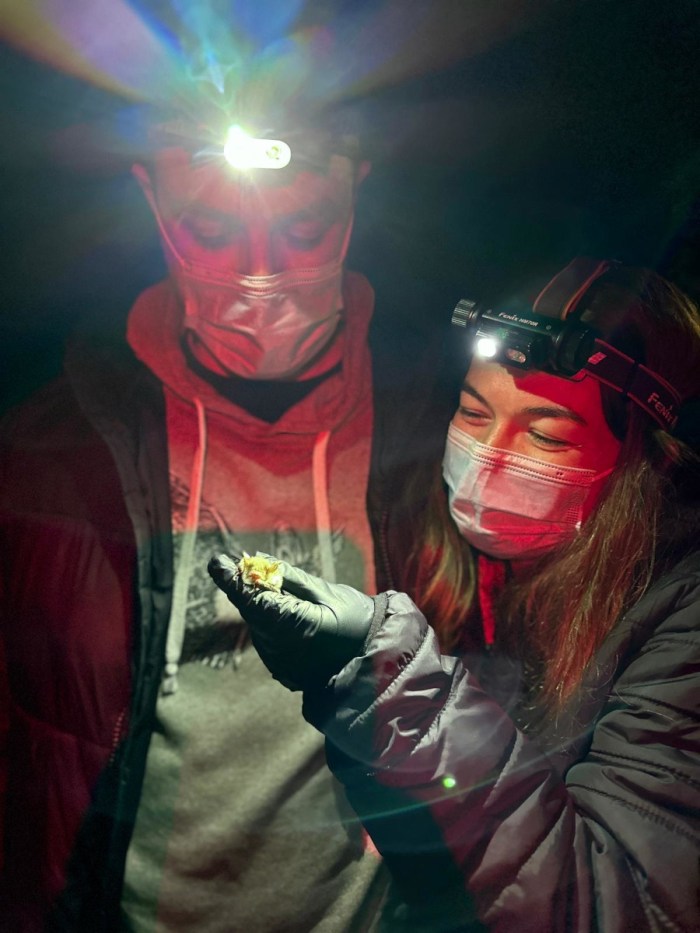
- On Friday Lesser Horseshoe, Serotine and Natterer’s were caught.
- On Saturday the same species along with several soprano pipistrelle


Trapping Session 2 – 31st May/1st June
On the second weekend’s trail trapping, lots of bats were caught, but no GLE yet.
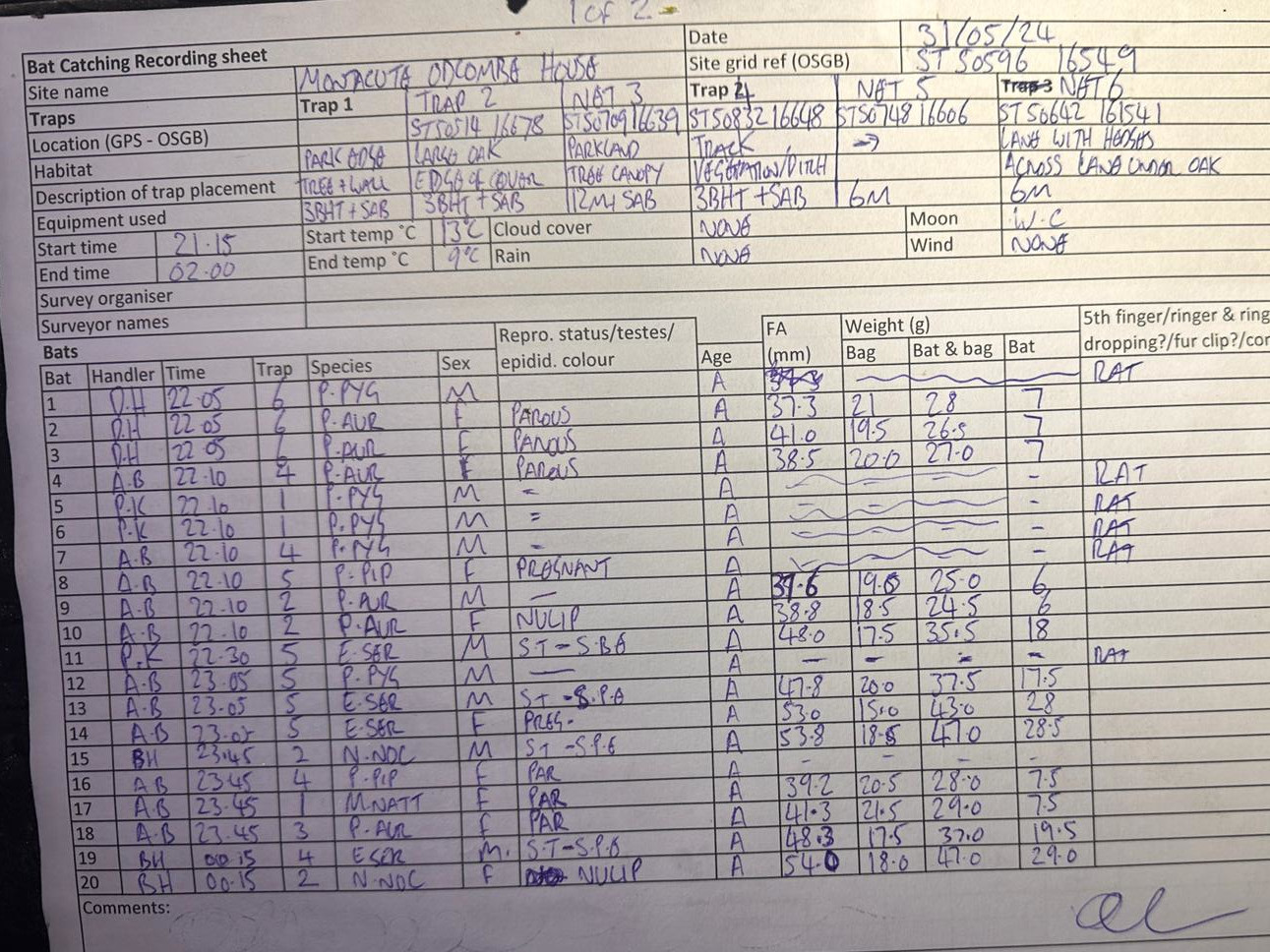
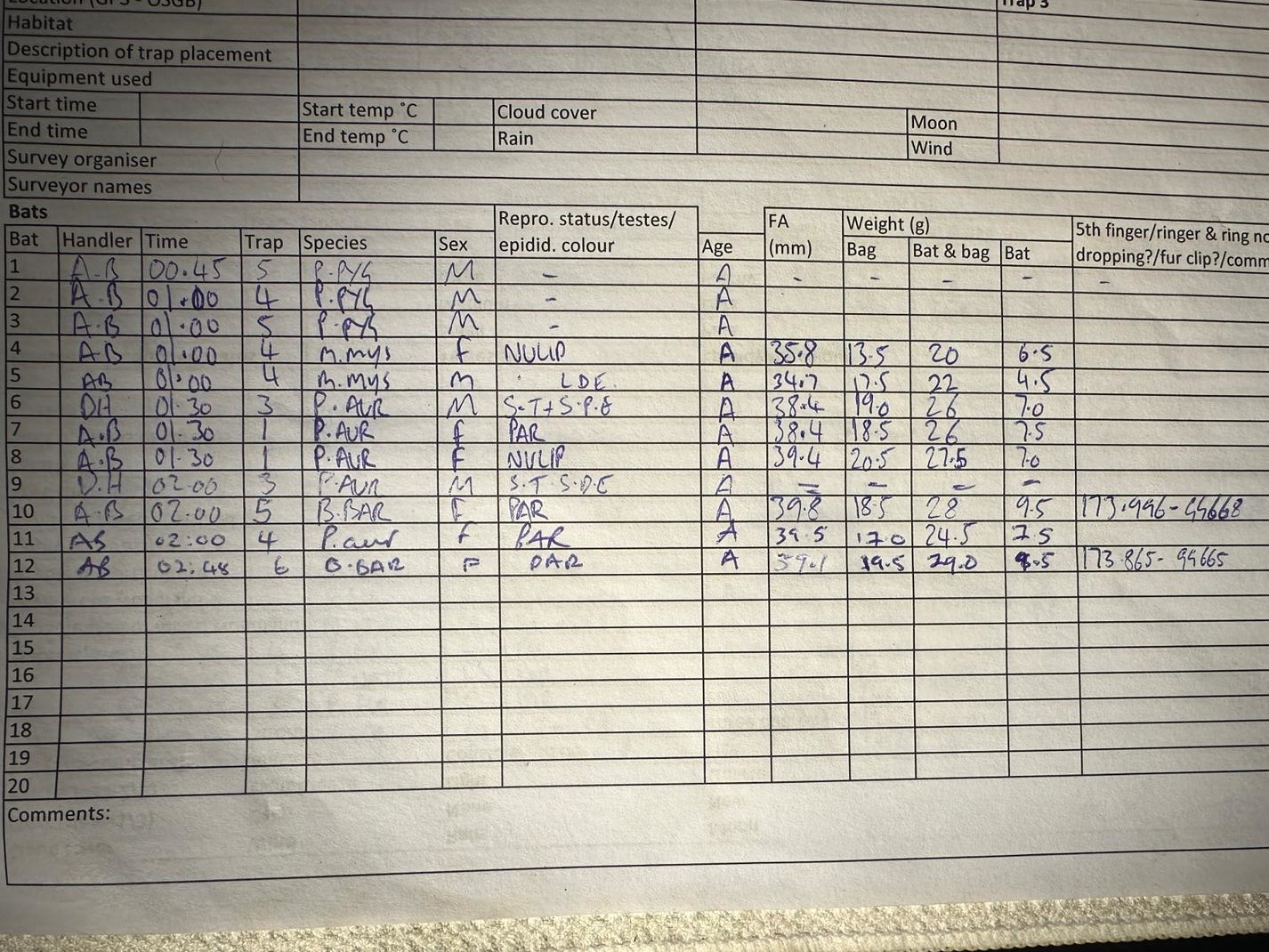
We didn’t get the permission we were hoping for and hence were on the backup plans at short notice. So a small team made it back to Montacute on Friday (31st). A good Friday nights trapping, 32 bats in total, across 8 species:
- 8 soprano pipistrelle
- 2 common pipistrelle
- 11 brown long-eared bat
- 2 whiskered bat
- 2 barbastelle
- 2 noctule
- 4 serotine
- 1 natterer’s
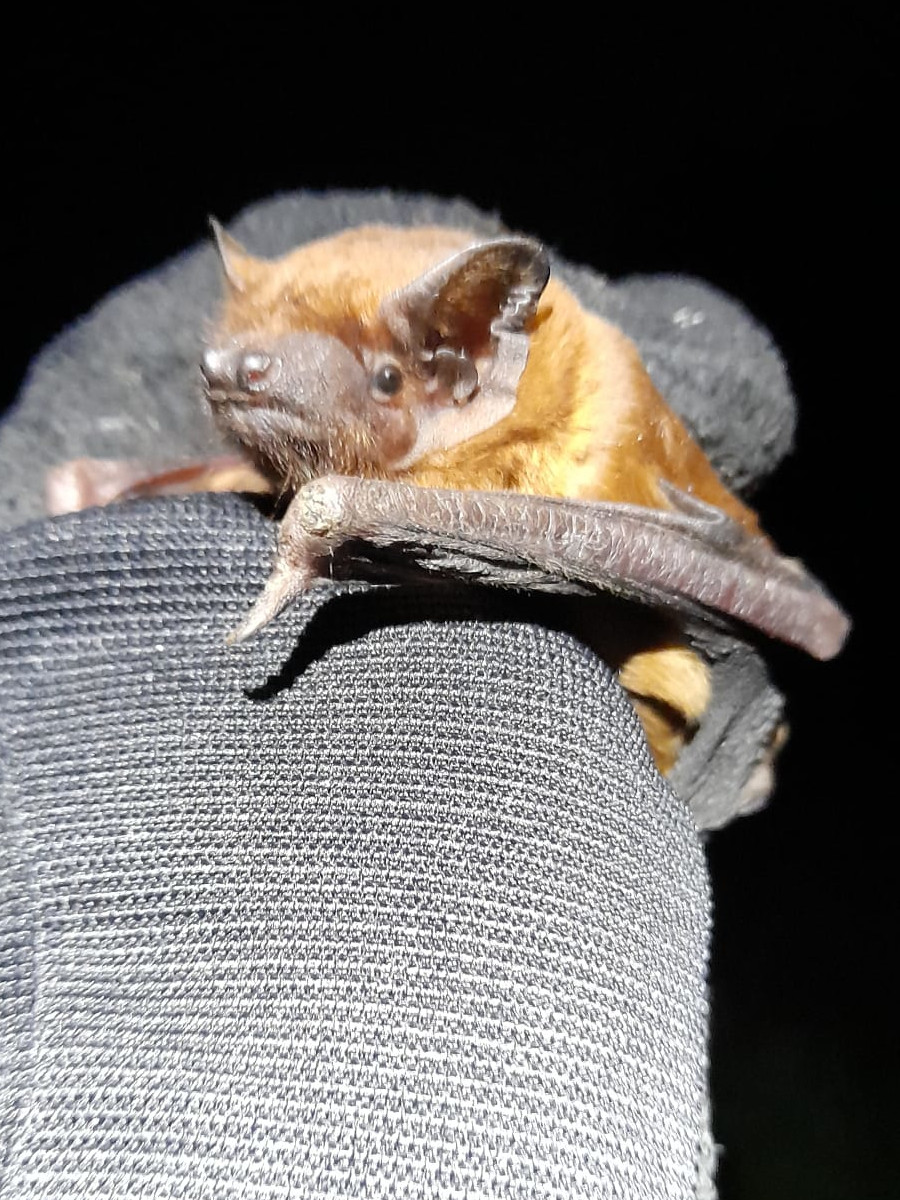
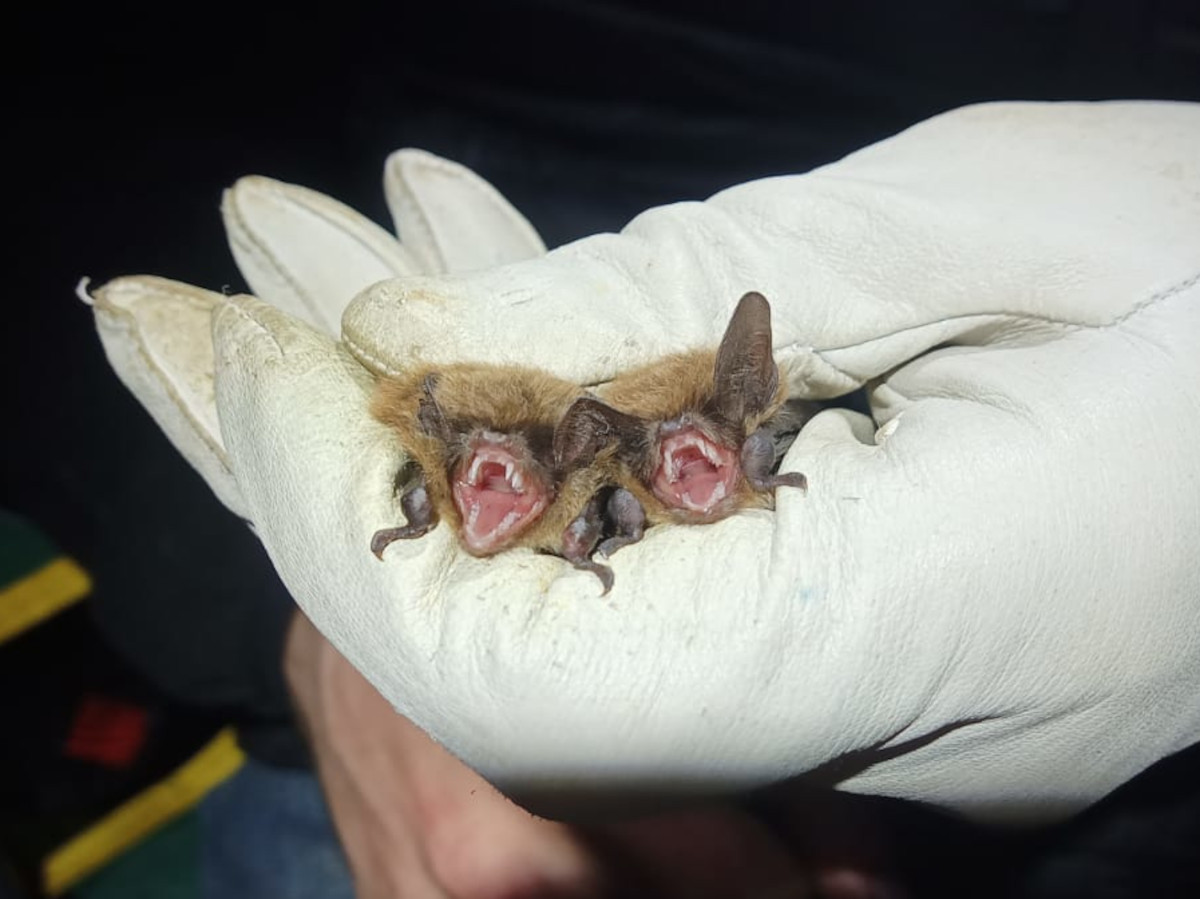
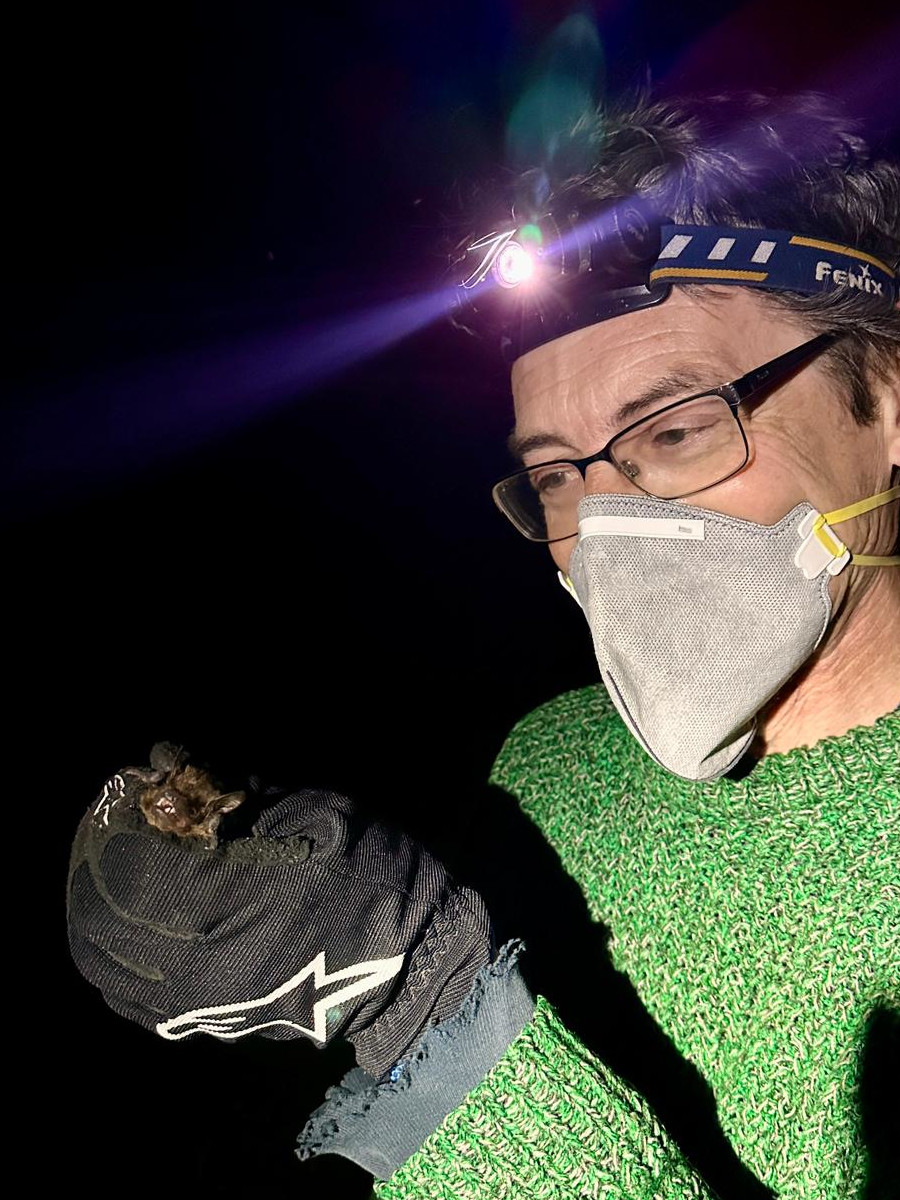
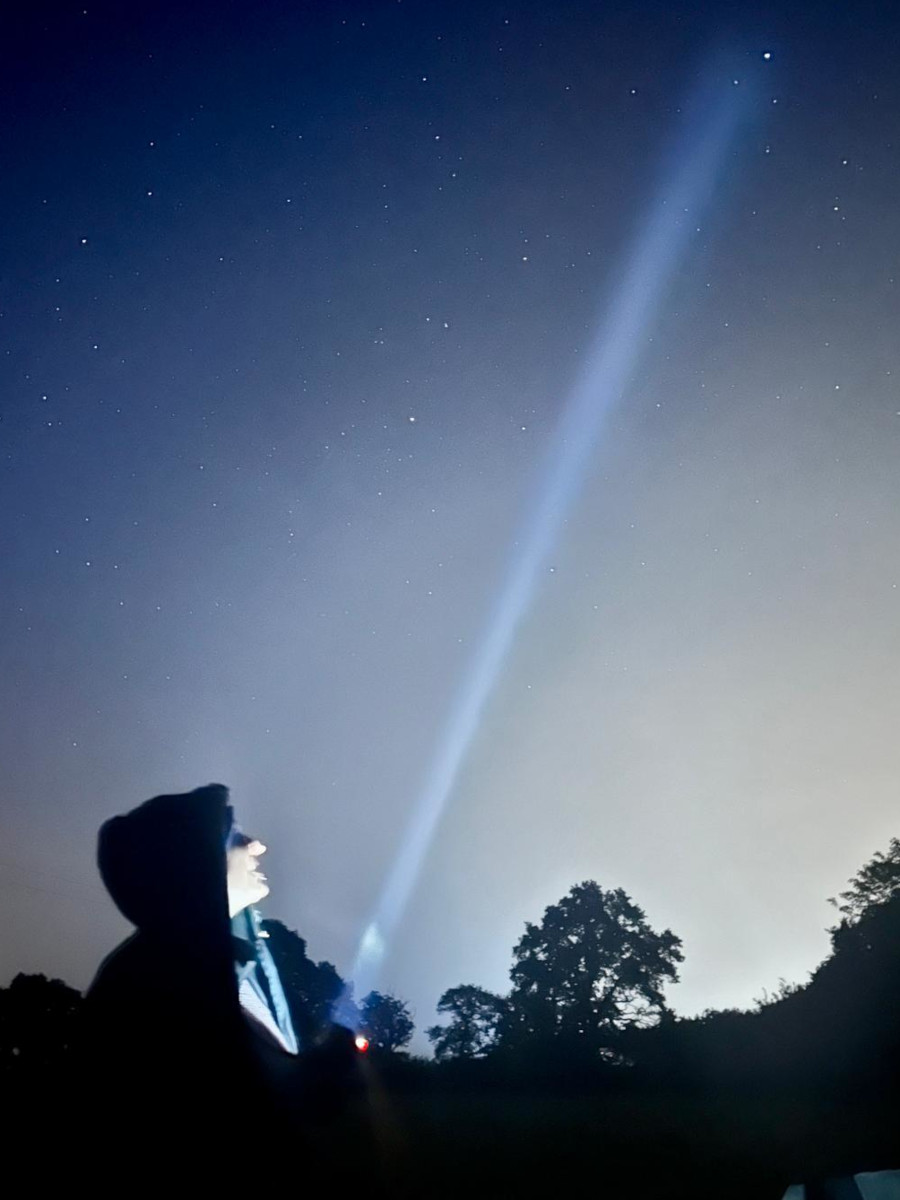
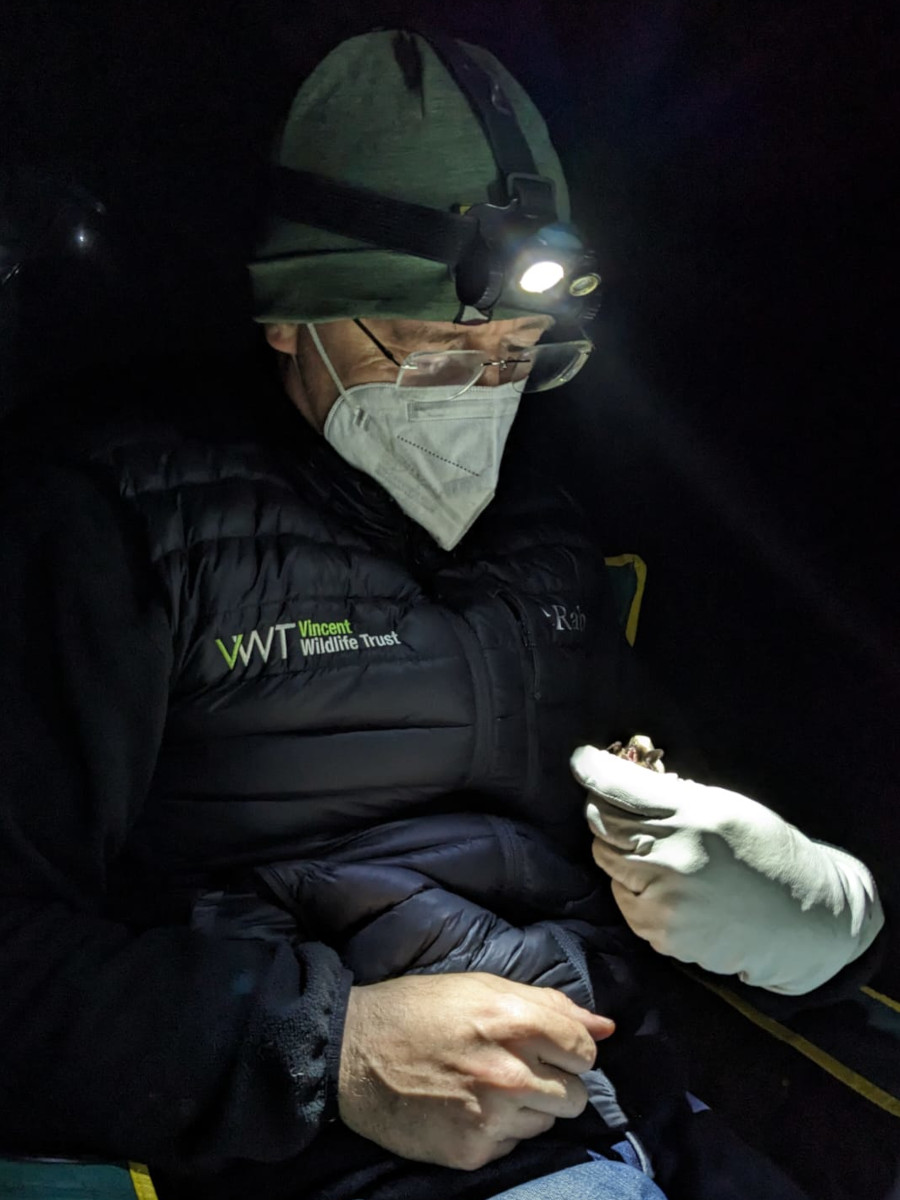
The two barbastelle were radio-tracked under a separate NE project licence for a national survey, and traced back to a tree on a nearby woodland.
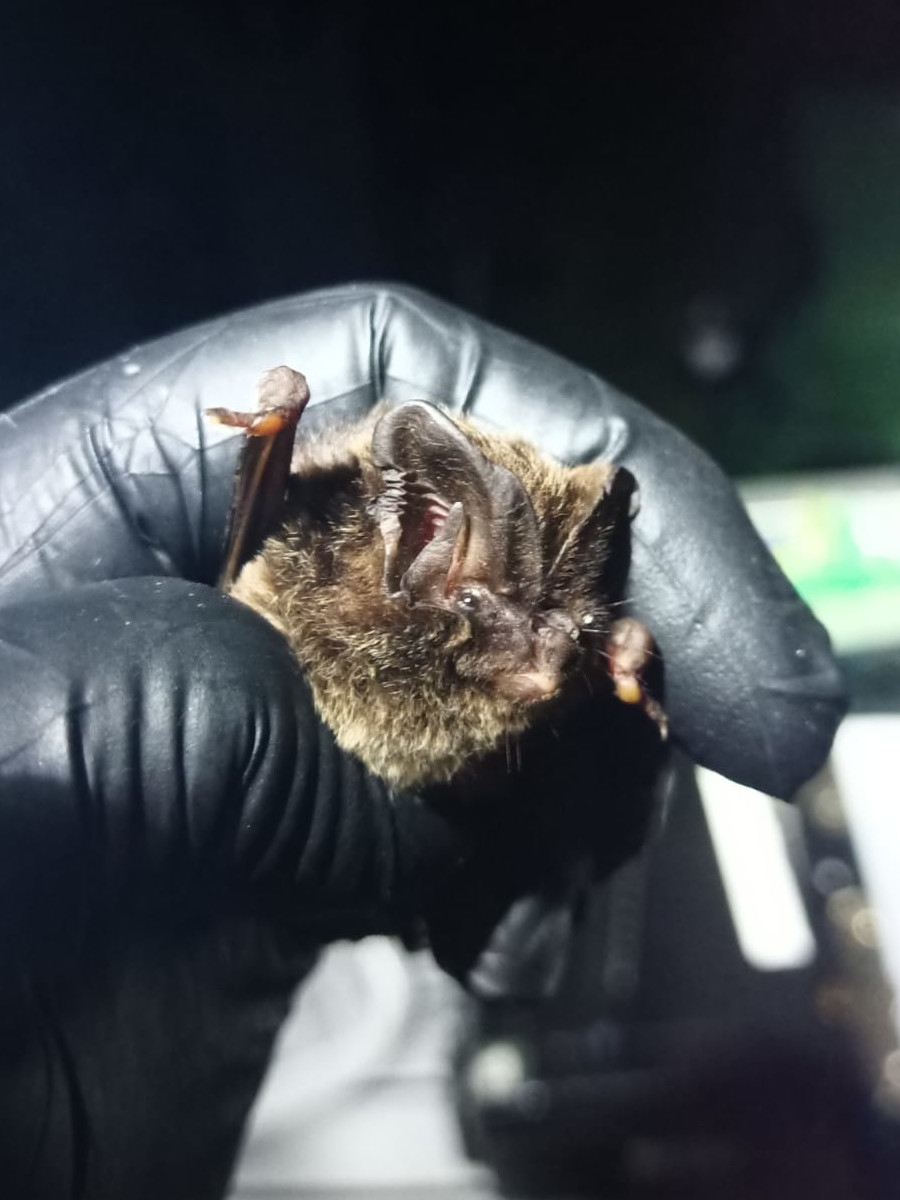
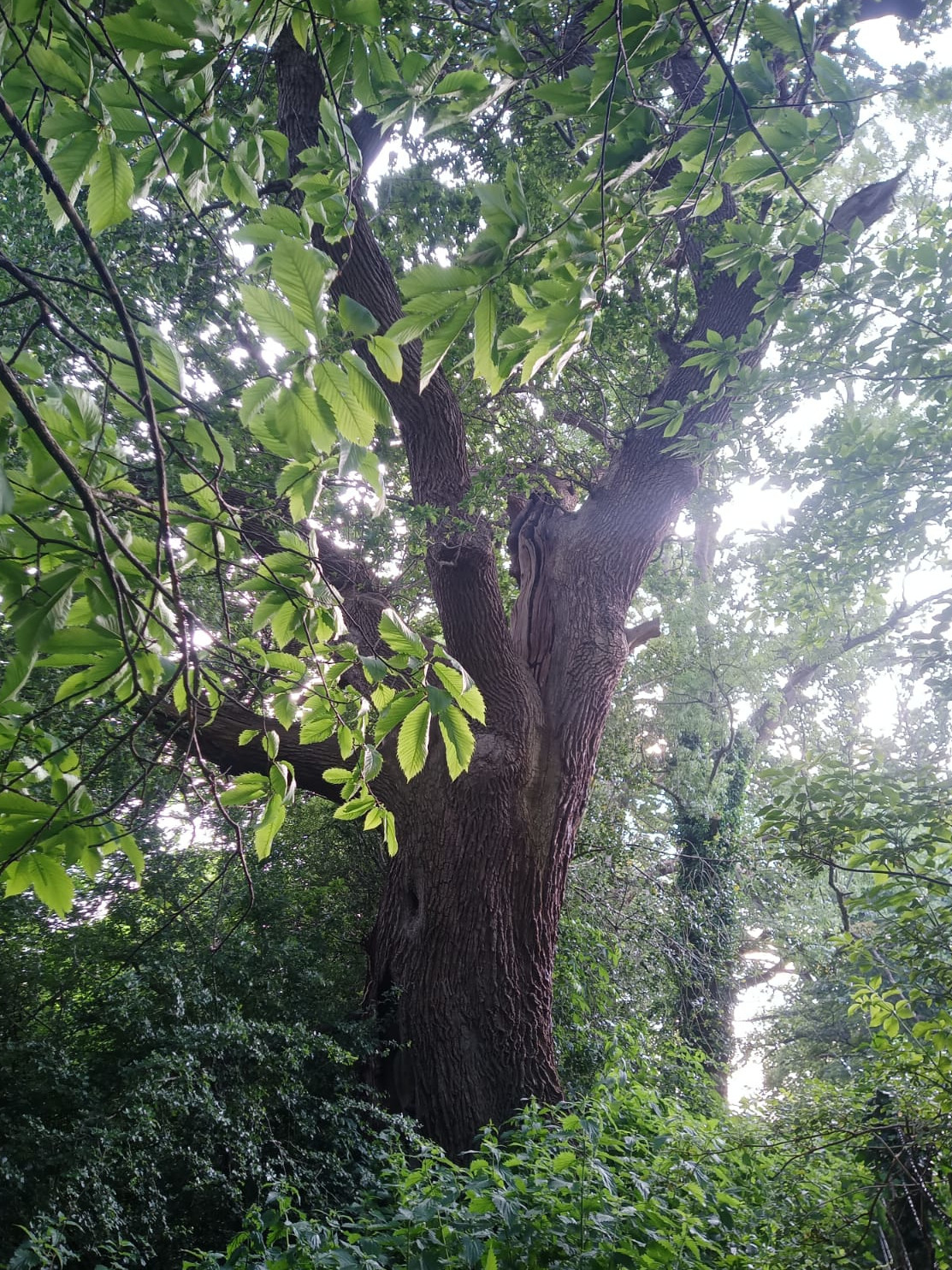
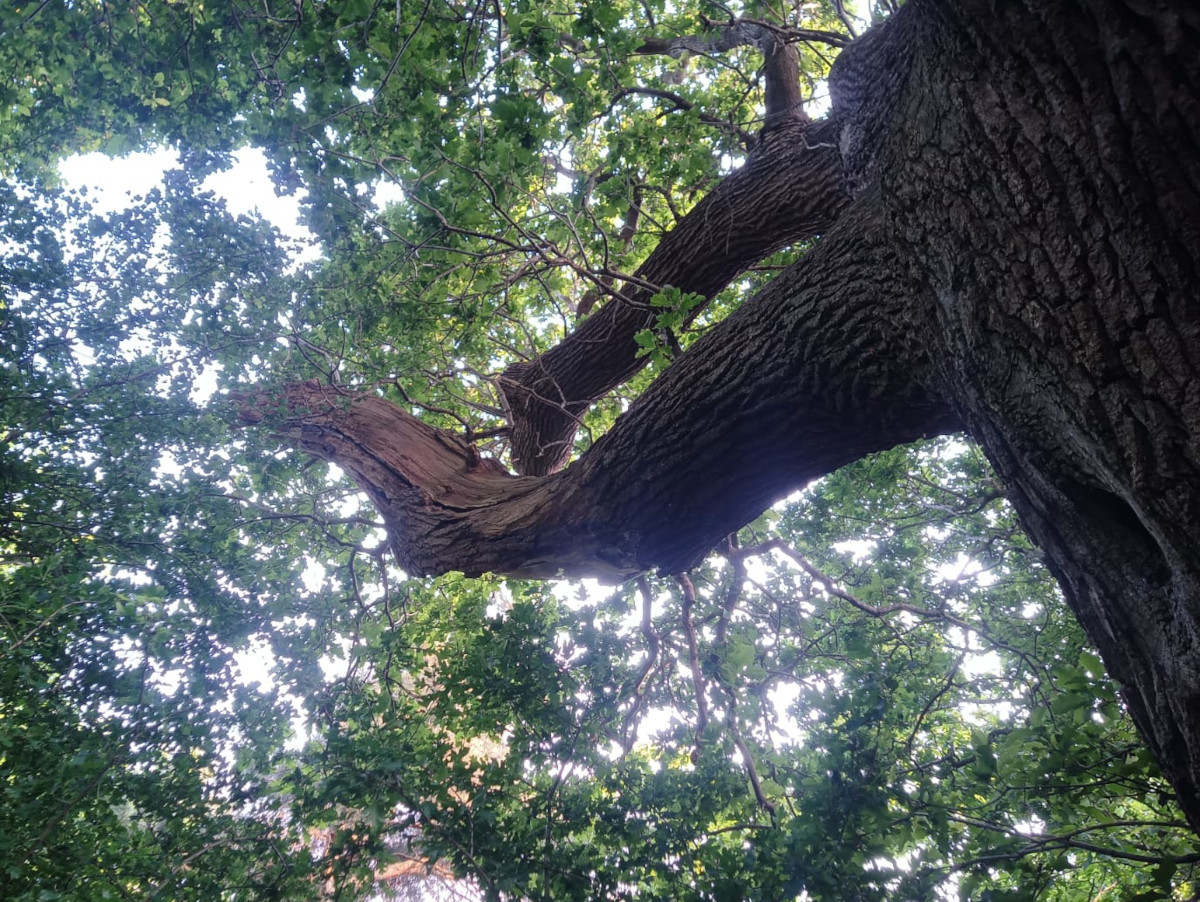
The team also sat there listening to the radio tag of a male Bechstein’s that Daniel had tagged 11 days before, and hangs around in the grounds of Montacute.
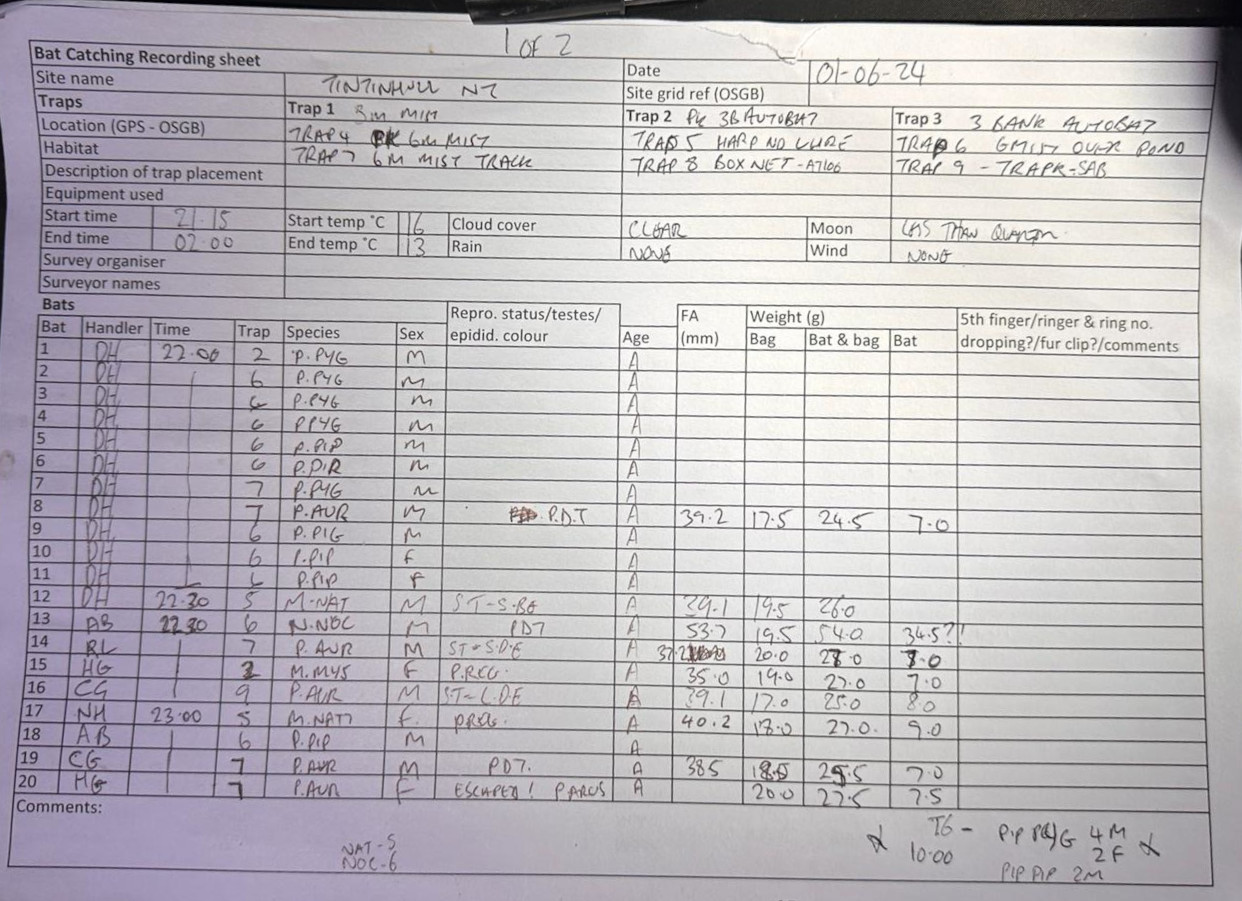
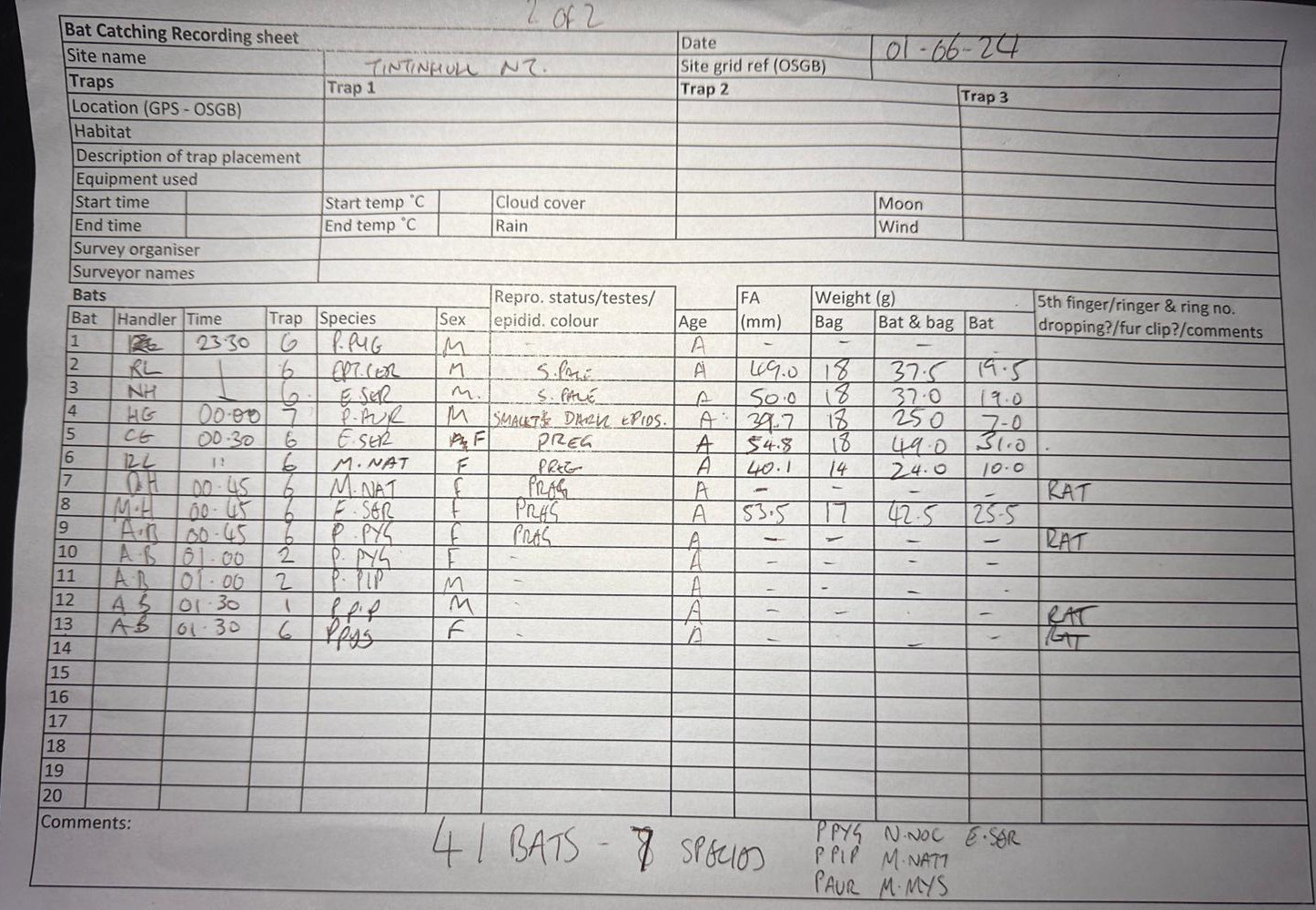
On Saturday night a full team met at another National Trust property, Tintinhull gardens. They were joined by BCT trustee Steve Roe who was recording an episode of the BCT podcast Batchat about the GLE project. Listen to the podcast on this link below:
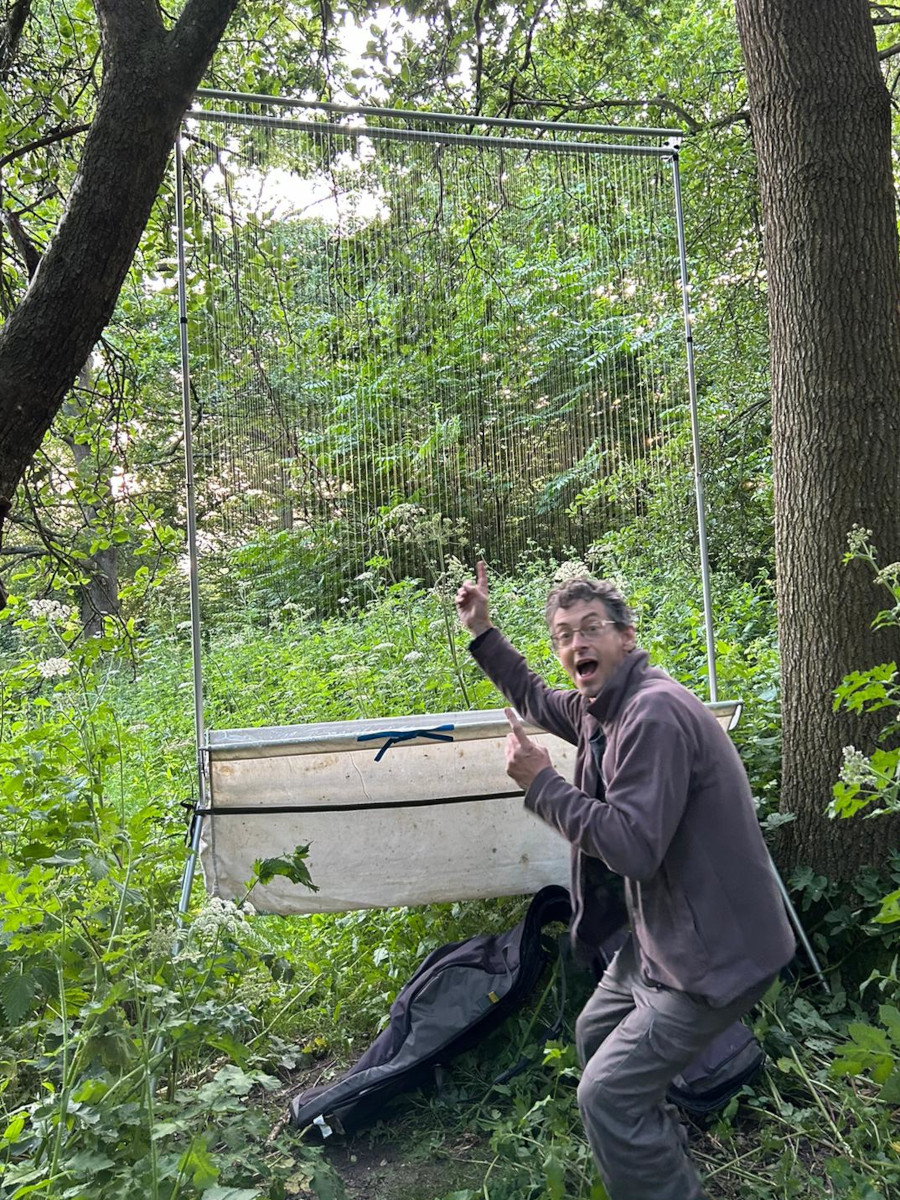
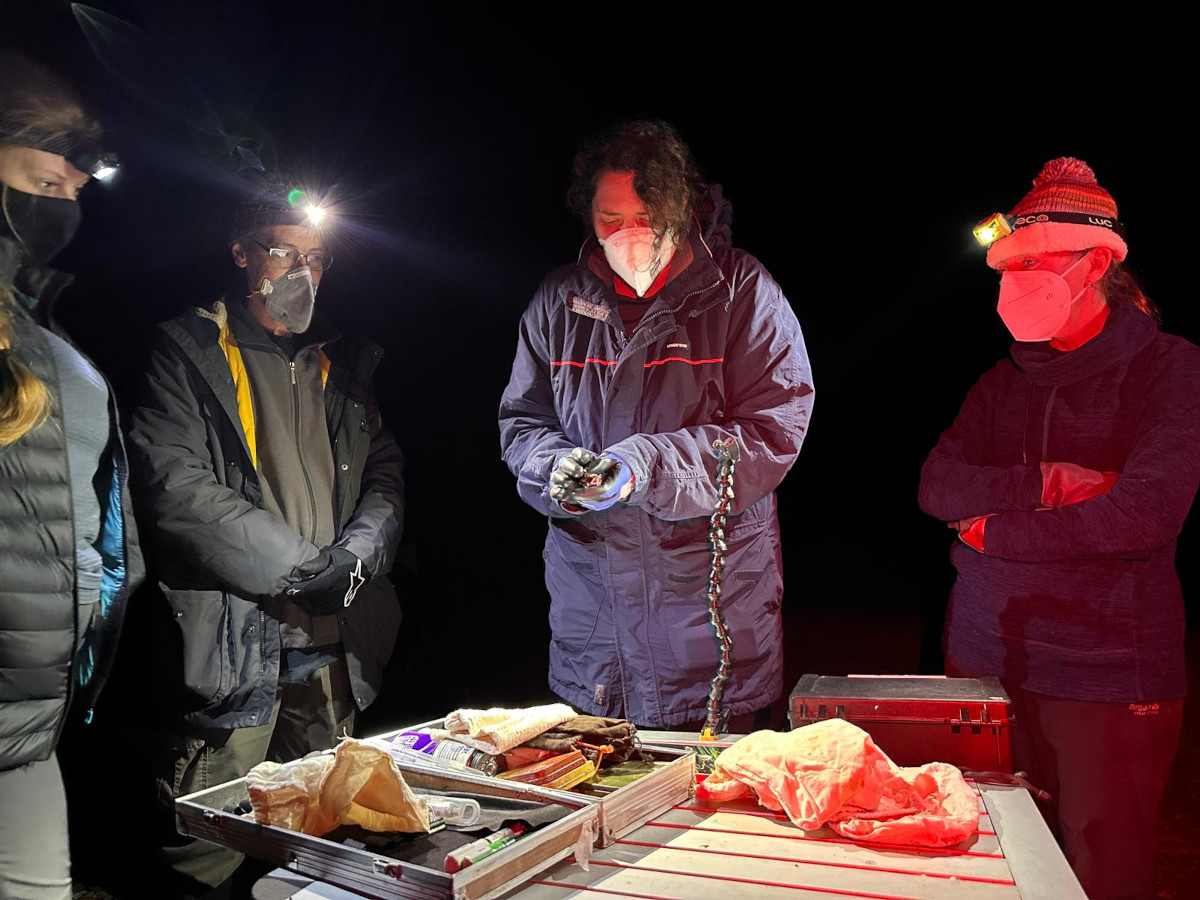
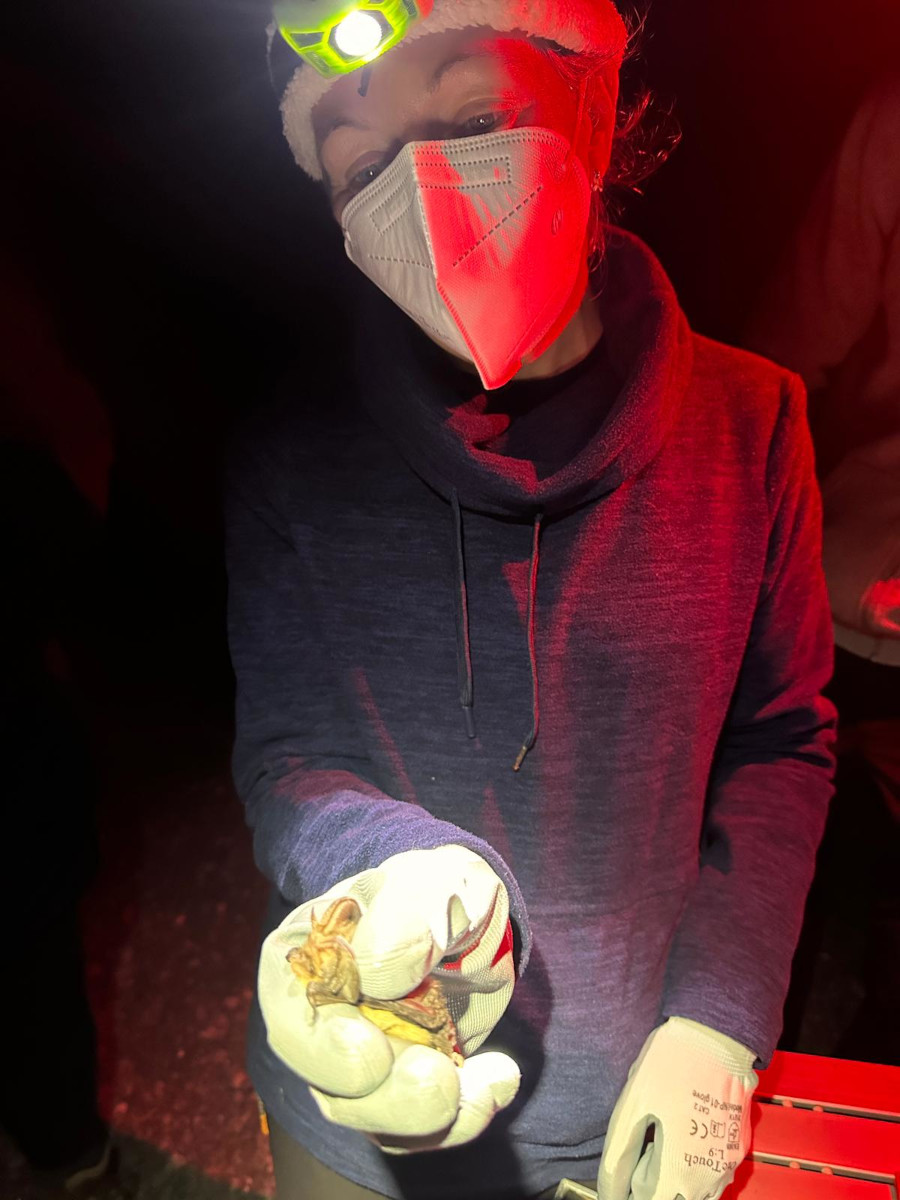
A successful night again 39 bats in total, across 7 species:
- 10 soprano pipistrelle
- 7 common pipistrelle
- 6 brown long-eared bat
- 1 whiskered bat
- 6 noctule
- 4 serotine
- 5 natterer’s
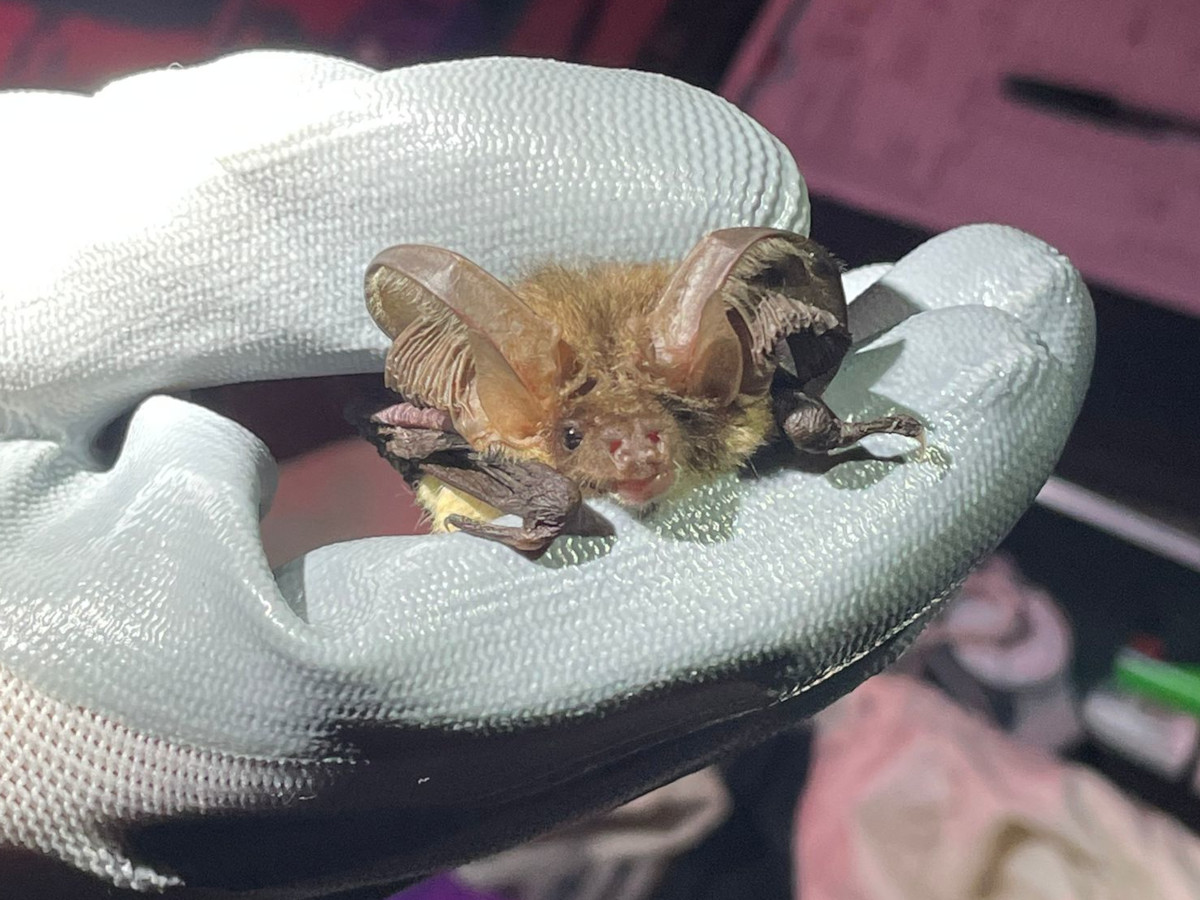
The hunt for GLE continues …
Trapping Session 3 – Exmoor 2nd and 3rd August
These sessions were led by Liz from the bat group and Fiona Mathews.

Fri 2nd was at Dunster Castle and Liz said “Team Bat were on a winning streak with 7 bats:
- 4 Lesser horseshoe
- 1 Common Pipistrelle
- 1 Whiskered
- and 1 small Myotis which escaped the net while untangling errant walkers
Team Nighthawk (don’t ask I don’t make up the names) with 4 bats; Common and Soprano Pipistrelle, brown long-eared and whiskered.”


Sat 3rd Aug was on the nearby Holnicote Estate and Liz reports: “Well, we threw everything at them, 7 nets (including one triple high) and 5 Harp Traps, and still no GLE. Nineteen bats in total:
- 12 Common Pipistrelle (1 female)
- 6 brown long-eareds (3 female)
- and a male Natterer’s right at the end.
A good training night and a nice variety of biscuits to make up for the lack of variety in bats. Thanks again to Fiona for making the weekend possible, and to Fiona and Ali for bringing along their kit”

Trapping Session 4 – 16th and 17th August
Daniel was back leading with Paul, on Friday the 16th, near Highbridge.


In what may prove to be a night that goes down in bat group history, a really busy night with a total of 53 bats were caught across 7 species.
And the first bat in the net (and the last of the night) was a grey-long-eared! A total of 3 male GLE were caught and two fitted with radio tags.
Unfortunately the groups basic web hosting does not allow embedded videos, however these links should work for most devices:
The busy night continued right through the night until the last GLE at 2AM. There was often a queue of bats to process. The species caught were:
- Grey Long-eared (all male)
- Brown long-eared
- Common Pipistrelle
- Soprano Pipistrelle
- Natterer’s
- Whiskered
- Serotine

The two GLE that were radio tagged, are both being tracked during the daytime to find their roosts. One is in a church, the other in a nearby farm building.


On Saturday the 17th August we decided to cross the border and invade North Somerset, near Kewstoke. Fortunately Samuel from the Avon Bat Group was on hand to chaperone us.
On a blustery night with the occasion patter of rain, the previous night proved to be a short lived success. With just 12 bats across 3 species caught.
- 1 Brown long-eared
- 6 Common pipistrelle
- 3 Natterer’s
- 2 Daubenton’s


Unusually for an open orchard pasture, with no obvious fresh water nearby, it was a surprise to get two Daubenton’s.


Grey long-eared Radio Tracking
Our chair Paul reports:
“This years Grey long-eared radio tracking kicked off with 3 male GLE caught all on the same night, where I had previously recorded a male GLE roosting in the tower of church near Highbridge.
53 bats of 7 species were caught that night in total, so a good night for many who came along to get handling and ID experience even without the target species.
Two of the GLE were tagged which were then located the following day, one in the church and one in a barn 300m away. The next two days they disappeared completely, but returned after to the original roosts and some useful foraging area usage was recorded, along with further night roosts and a curious end to the tracking when the church roosting bat switching to the nearby council estate.
They made good use of small orchards after initially leaving their individual roosts, then moved more widely into distinct areas. We only wish we’d tagged the third bat now, but at the time following 3 males didn’t seem to justify the expense of the tags.
All 3 bats were caught trying to get into the entrance porch of the church, so something is going on that we don’t really understand – somewhere nearby there must be some females.
Next year we may be able to better target sites based on these three captures.”