Wow! August was hot! And our busiest ever month for Big Bat Counts, read all about it below.
Also in this August Bat Group Newsletter:
- Another new project launches: Informing recovery actions for priority bat species
- A huge month for Big Bat Counts
- An invitation to Hope In Action: The State of Nature at Heal Somerset
- Your next Bat Group events
- The latest BCT Bat Group Bulletin includes news that for Bat Earned Recognition (ER), applications for Accreditation Level 2 and optional annexes now open
- A reminder that 2025 memberships lapsed at last Aprils Annual Meeting
New Project: Informing recovery actions for priority bat species
Hard one the heels of one new (GLE) project funded by the governments Species Recovery Programme, comes another one. This project is led by Keele University and is titled “Informing recovery actions for priority bat species (Leisler’s, Brown long-eared, Grey long-eared)”.
They have sent us the following invitation:
We’re really pleased to share that we’ve recently secured funding for a new Natural England project focusing on three priority bat species: Leisler’s, Brown Long-eared, and Grey Long-eared. We would like to give bat groups the chance to hear what the project involves, ask questions, and see whether it’s something you might be interested in engaging with as your knowledge of roosts in your local area is invaluable. We’re aware of the sensitive nature of GLE roost sites, and so we’ll be coordinating all GLE activities of our project with BCT and their complementary GLE project, which is also part of the Species Recovery programme, which should hopefully reduce the concern pertaining to duplication.
To provide further information, we’re hosting a short introductory webinar, offered on two dates. The session will outline the aims of the project, the types of roosts we’re hoping to identify, and the kinds of data that would help strengthen recovery actions for these species. It’s simply an opportunity to learn more and explore whether the project aligns with your group’s interests and understanding if anyone would be interested in getting involved.
If you’d like to join us, please register for your preferred date using the link below:
- Thursday 10 September, 11:00–12:00 Informing recovery actions for priority bat species (Leisler’s, Brown long-eared, Grey long-eared)
- Tuesday 15 September, 19:00–20:00 Informing recovery actions for priority bat species (Leisler’s, Brown long-eared, Grey long-eared)
We’d be very glad to have you there and to hear your thoughts.
Best wishes, Dr Ellie Harrison, Lecturer in Ecology, Keele University
Big Bat Count reports
August was our busiest ever month for Big Bat Counts, details from some of the events below.
Tues 4th August – Frome Big Bat Count #2


Once again we had another fully booked Big Bat Count, with many people returning for another go. So around 50 people in 11 teams set off into a warm but breezy night. Our thanks once again to Jo from Frome Town Council for superb organising and Keith for the help.
A total of 186 bat observations were made across 12 Species, just one less than the same time last year. The two Pipistrelle species were again the most commonly seen. Noctule and Serotine were the next most common, and as usual the EMT’s auto IDed a number of Leisler’s (lesser Noctule), but these usually turn out to be noise or Serotines after verification.
Initial unverified observations from the night of 4th August 2026 are in iNaturalist:
The recordings made on the night have now been downloaded and initial analysis done. There were a total 405 bat passes recorded across a possible 8 species. The majority being Common Pipistrelle (51%), Soprano Pipistrelle (35%) and then Serotine (7%) and Noctule (3%) There were just a few recordings of possible Daubenton’s, Nathusius’ Pipistrelle, Brown Long-eared and Lesser Noctule (Leisler’s) which all will need more verification.
Fri 7th August – Blagdon Hill Big Bat Count
Our second Big Bat Count hosted by the community group in Blagdon Hill on the Blackdowns. Apparently the Bat Count is their most popular event of the year, more popular than plants, moths or butterflies! Huge thank you to Linda for organising everyone.
Around 25 people met in the beer garden of the Lamb and Flag, on a still and warm night and split up into 6 teams. Unfortunately, we are very sorry to say that only 2 of the 7 EchoMeter tablets actually managed to record for more than a few minutes. It turned out that Wildlife Acoustics the manufacturer of the EchoMeter issued a software update on Tuesday 4/8, that is incompatible with our group’s tablets. We have raised this issue with their customer support, and can only offer our apologies for the frustrations with the technology.
Despite these problems a total of 42 bat observations were made across 4 Species. The two Pipistrelle species were again the most commonly seen, along with a few Noctule and brown long-eared.
Initial unverified observations from the night of 7th August 2026 are in iNaturalist:


The recordings made on the night have now been downloaded and initial analysis done. And despite there being only a couple of devices recording, there were a total 98 bat passes recorded across 6 possible species. The majority being Common Pipistrelle (60%) and then several Soprano Pipistrelle (10%). There were a surprisingly large number of possible Lesser Noctule (Leisler’s) (26%) identified, and single recordings of possible Serotine, Natterer’s and Barbastelle, all of which will need more verification.
Sat 8th August – SANHG Big Bat Count

Our first Big Bat Count for Somerset Archaeological and Natural History Group. A warm still Saturday night in a very lively central Taunton. It was lovely to use the newly restored Wyndham Hall with its banked seating, and probably the best projector in Somerset! Many thanks to Christine from SANHG for superb organising.
Around 20 people met, and after the briefing split into 4 teams. A total of 47 bat observations were made across 6 Species. The most commonly observed was the Soprano Pipistrelle, followed by the Common Pipistrelle then Noctule.
Initial unverified observations from the night of 8th August 2026 are in iNaturalist:
- Bat Map produced on the night of the unverified observations
- Species observed during the SANHG Big Bat Count 2026
The recordings made on the night have now been downloaded and initial analysis done. There were a total 192 bat passes recorded across a possible 4 species. The majority being Soprano Pipistrelle (71%) and Common Pipistrelle (25%). There were just a few recordings of Noctule (1.5%) and Brown Long-eared (1%) which will need more verification.
Fri 14th August – Drayton Big Bat Count
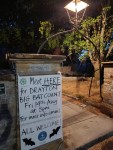
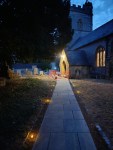
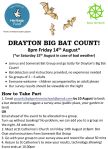
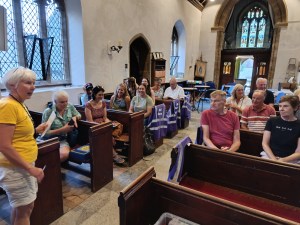
Our first ever Big Bat Count in a church, lent a special atmosphere to the evening! The count was organised by the local community group as part of the St. Catherine’s church “raising the roof” funding bid. Our thanks to Sally for superb organising, and the use of the projector.
Around 25 people met on a very warm (20 degrees!) but quite breezy night, and split off into 6 teams to survey the village. A total of 50 unverified observations were made across 9 species. The two Pipistrelle species were the most commonly seen, along with a few Serotine and Noctule.
Initial unverified observations from the night of 8th August 2026 are in iNaturalist:

The recordings made on the night have now been downloaded and initial analysis done. There were a total 222 bat passes recorded across a possible 8 species. The majority being Soprano Pipistrelle (55%) and Common Pipistrelle (35%),and then Serotine (3.6%) and Noctule (2%) There were just a small number of recordings of possible Daubenton’s (2%), Lesser Noctule (Leisler’s) (1%), and a couple of Natterer’s and Whiskered, all of which will need more verification.
Sat 22nd Aug – Bridgwater Big Bat Count
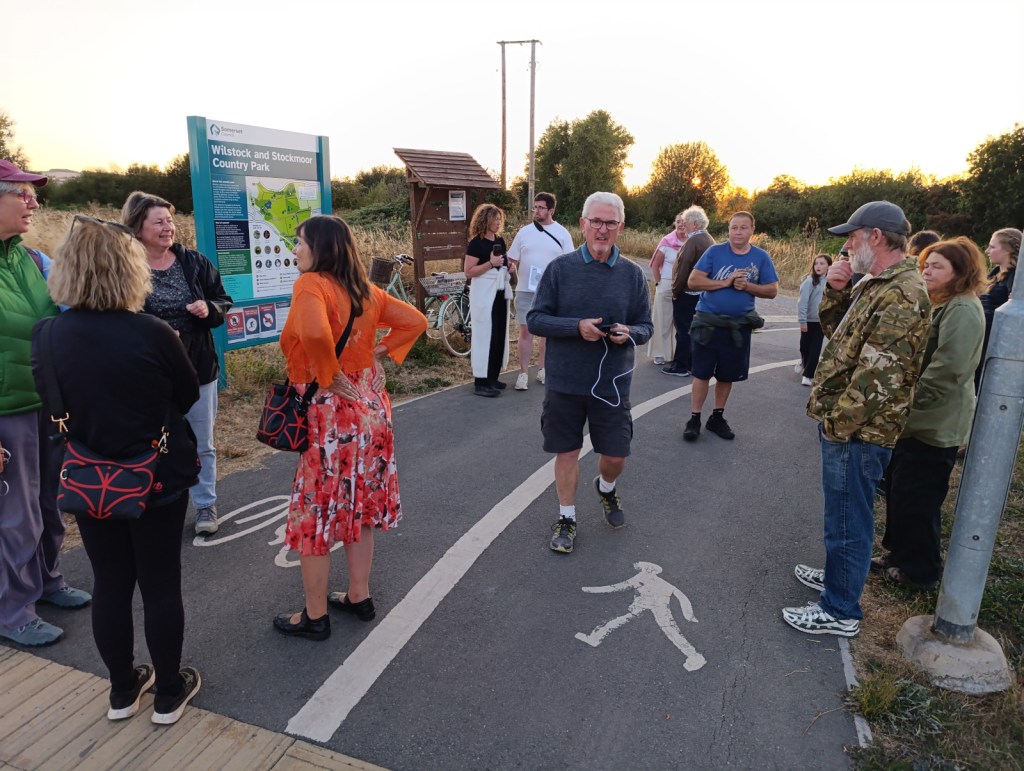
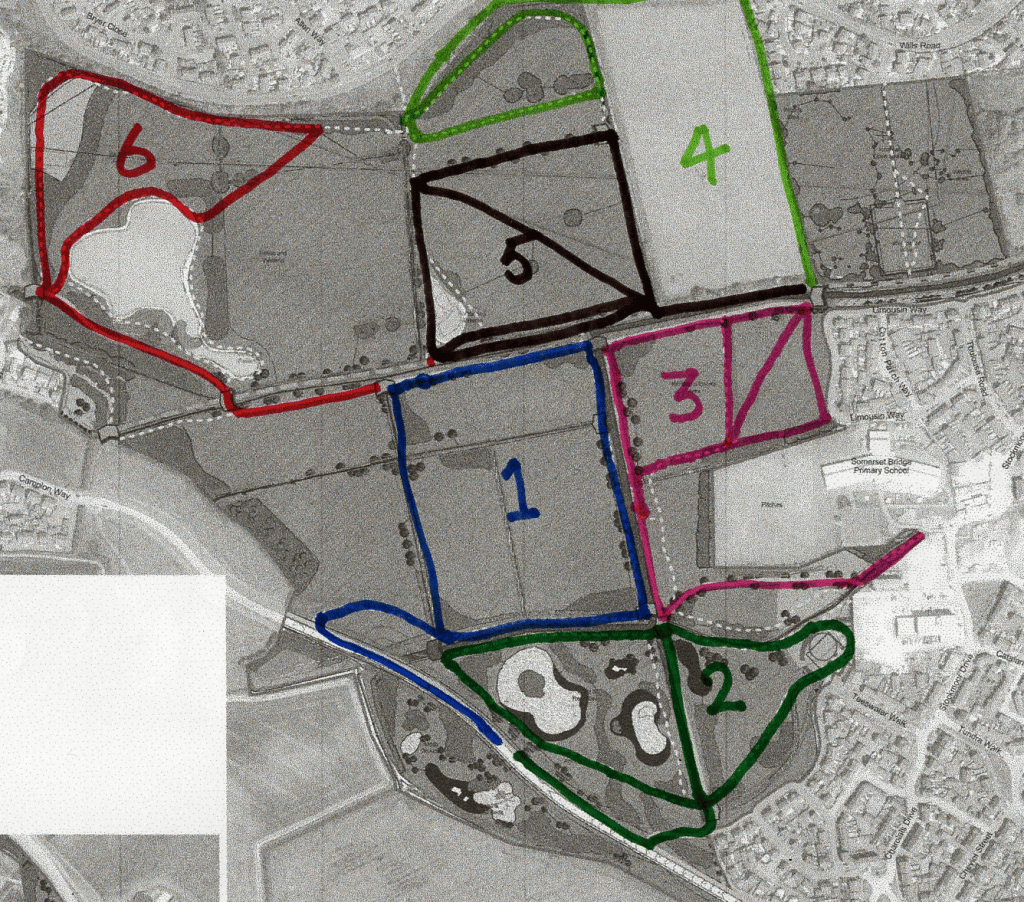
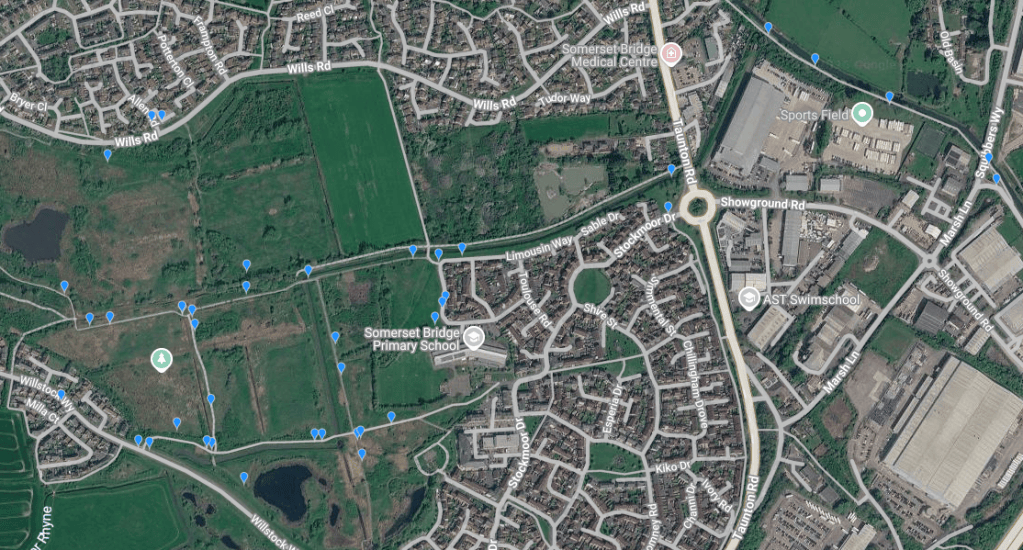
Returning to Bridgwater for another count hosted by the friends of Wilstock and Stockmoor Country Park. Our thanks to Roger for superb organising, and sorting out the maps and the teams.
Around 25 people met on a night that started quite warm, but unlike the rest of this summer cooled off quite quickly. Six teams set off to survey different areas of the country park. A total of 49 unverified observations were made across 10 species. The two Pipistrelle species were the most commonly seen, along with a few Noctules.
Initial unverified observations from the night of 22nd August 2026 are in iNaturalist:
- Bat Map produced on the night of the unverified observations
- Species observed during the Bridgwater Big Bat Count 2026
The recordings made on the night have now been downloaded and initial analysis done. There were a total 163 bat passes recorded across a possible 6 species. The majority being Soprano Pipistrelle (53%) and Common Pipistrelle (40%),and then Noctule (5%).
There were just single recordings of possible Daubenton’s, Lesser Noctule (Leisler’s), and Whiskered, all of which will need more verification.
The State of Nature at Heal Somerset
The group received the following invitation from Heal Rewilding in Witham Friary, Somerset
Join Heal Rewilding’s co-founder and CEO, Jan Stannard, on Friday 16 October for a presentation and guided walk exploring the findings of our new Heal Somerset State of Nature Report 2026.
How do we know whether rewilding is working? At Heal Somerset, we believe that nature recovery should be driven by evidence as well as ambition. Our State of Nature Report, the first of its kind to focus on rewilding, brings together the first suite of ecological surveys from the site, helping us understand how nature is responding to our rewilding approach and contributing to a growing national evidence base.
Jan will share the thinking behind Heal’s approach, from re-naturalising water flows and introducing ecosystem engineers to allowing trees and scrub to regenerate naturally, before taking you out onto the land to see these approaches in action.
Discover what the early evidence is telling us about nature’s recovery and how rewilding can help tackle the biodiversity crisis, build climate resilience and create healthier, more resilient ecosystems.
Read the full report here and book your ticket here.
Please email events@healrewilding.org.uk if you have any questions about this event.
All the best, Heal Events Team
The next Bat Group Events
There are lots of things planned, so come along and get involved! The next events are:
- Fri 11th Sept – Charltons Big Bat Count
- Sat 12th Sept – Great Breach bat box checks
- Sat 19th Sept – Bat Detector Building – Otterton, Devon
- Sat 19th Sept – Kings Castle Bat box checks
- Sun 20th Sept – Mini Pipistrelle Building – Otterton, Devon
- Sat 3rd October – PippyG-athon – Bat Recorder Building Workshop
Details of how to get involved for all events are on the website: https://somersetbat.group/events/
Bat group bulletin
The latest BCT Bat Group Bulletin includes news that for Bat Earned Recognition (ER), applications for Accreditation Level 2 and optional annexes now open.
All past editions of the Bulletin can be found on this page of our website:
Membership renewal time
It’s the time of the year to think about membership of the bat group. There are currently:
- 54 members who last paid membership in 2025, and their membership lapsed at our annual meeting in April
We will send an email to each member detailing your current membership status, so please check your inbox (and spam).
It costs just £5 per household to rejoin the bat group (free for students/unwaged), and your renewed membership would then run until our April 2027 annual meeting, on 17th April 2027.
For regular members, you might like to consider taking out lifetime membership, which is just £50 per household.
Please pay your membership subs by BaCs or Paypal. Then:
- If your details have changed, then complete our online membership form to update your information.
- OR, if nothings changed, simply just drop us an email to let us know you have paid.
Full details on our website: https://somersetbat.group/join/