September was another busy month with lots of bat box checks, and in our Grey Long-eared project a massive five(!) were tagged. Read all about it below.
Also in this September Bat Group Newsletter:
- Grey long-eared project update
- Lots of bats seen in the Box checks
- Our final Big Bat Count of the year
- More successfully Bat Detector making workshops
- Booking is now open for the Bat Worker’s Forum 2026
- Next steps on the “Informing recovery actions for Leisler’s, Brown long-eared and Grey long-eared bats” project
- The latest BCT Bat Group Bulletin includes includes a Bats & Health update
- A last reminder for 2025 members to renew now
Grey long-eared project update
Our chair Paul reports on this autumn successes with Greys:
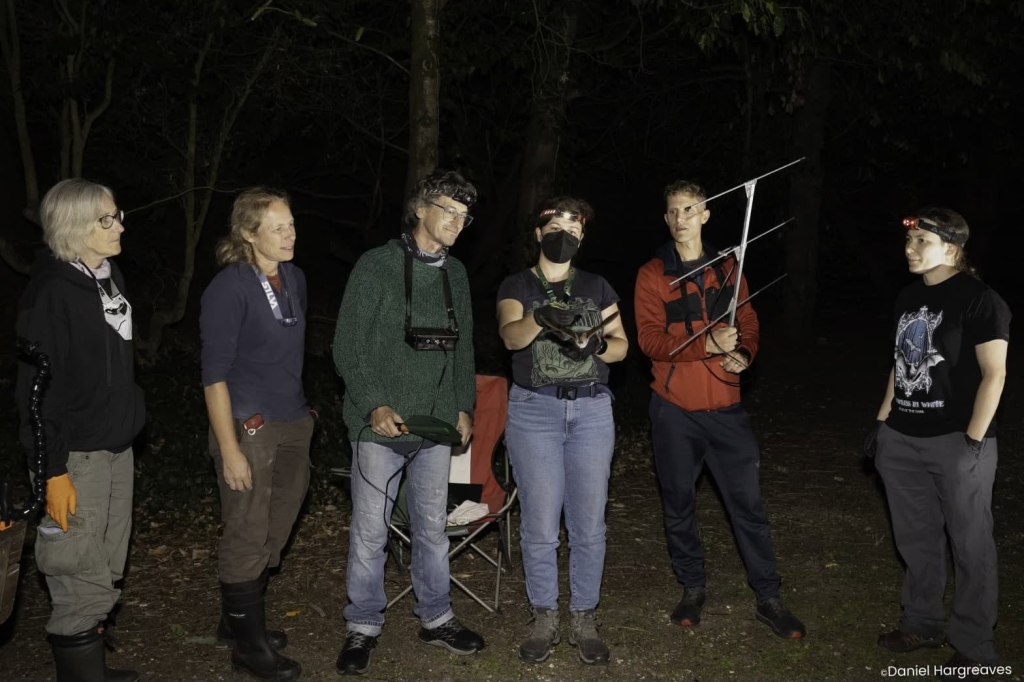
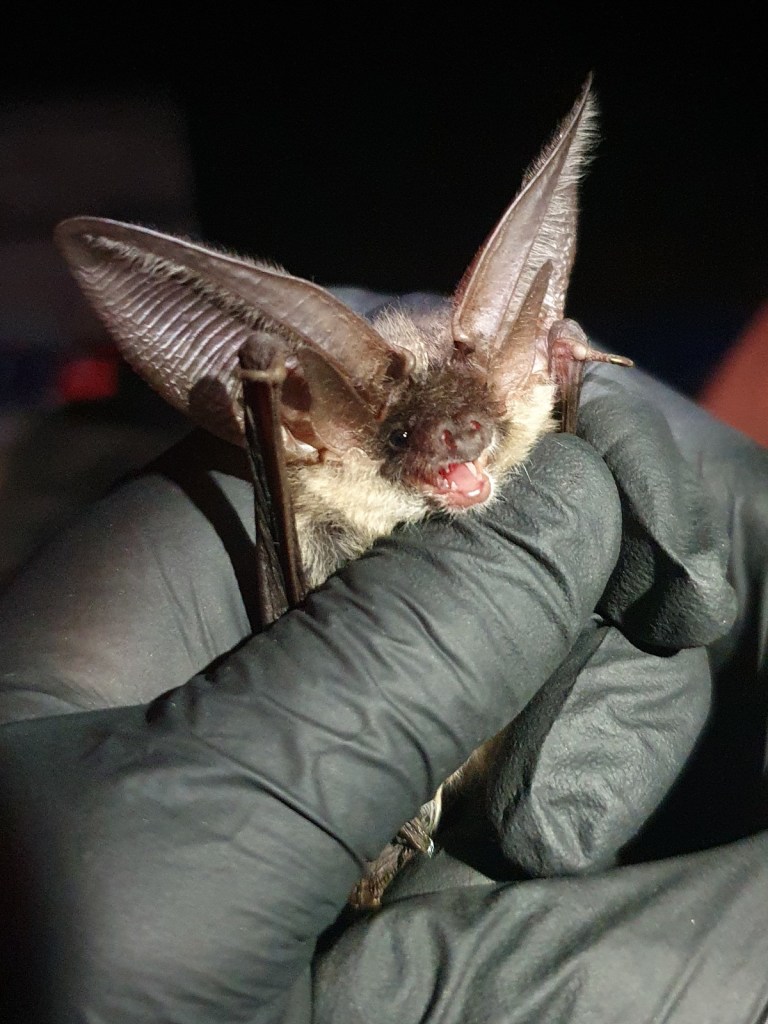
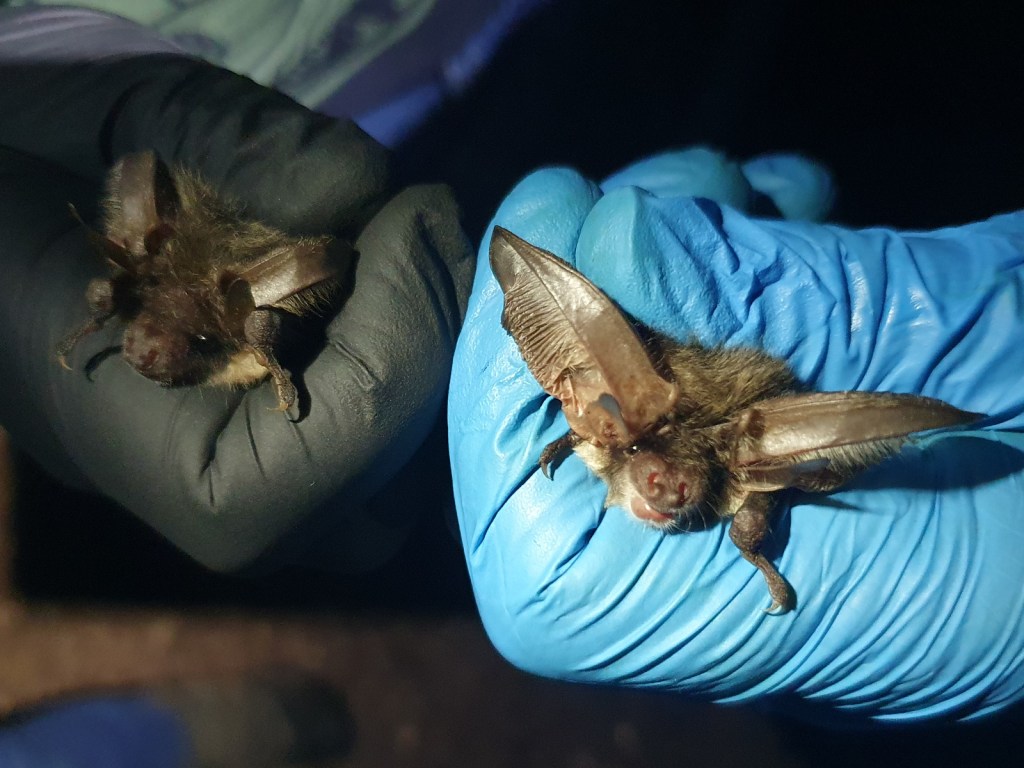
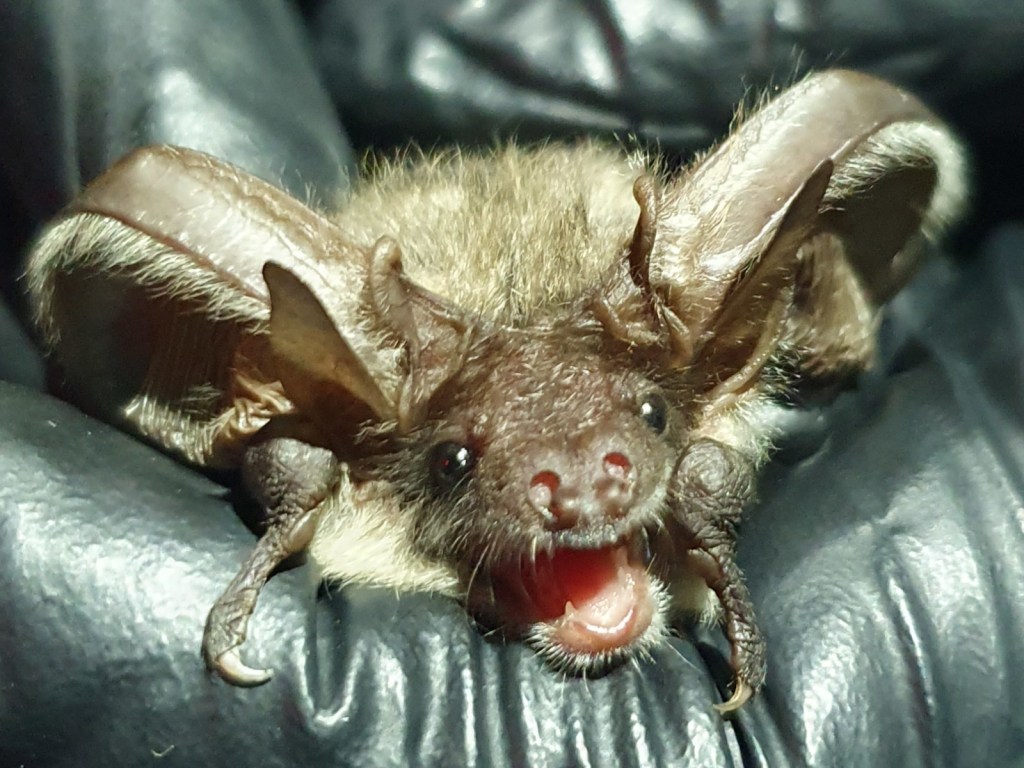
“With the news that the Grey Long-eared project is to start next year, and the project manager Ellie appointed, Dan wanted to have a last fling at catching some GLE and try out some new lure calls for the species. So a small band headed out to the National Trust’s Montacute House on the 21st September to try our luck. Dan had previously radio tracked a rehabilitated male in the house and grounds and we’d unsuccessfully tried trapping there before but without the new lure calls. Lo and behold, two male Grey Long-eared dutifully threw themselves into our nets and had VHF tags attached and we all went home satisfied on a job well done.
Unfortunately, similar to our previous experience with males at Huntspill two years ago, they promptly disappeared off the radar for a couple of nights. One eventually turned up in an open fronted barn used as a car port at Montacute, and after several hours of searching by Dan and 16,000 steps, bat 2 was located just north of Yeovil in another open fronted barn. Subsequent tracking initially suggested that the bats weren’t moving much, if at all, until we had to accept that both tags had come off the bats at roughly the same time in the same circumstances.
A further two trapping sessions took place yielding 3 more GLE, all male and these were tagged with a different kind of tag that allows remote location viewing, although they don’t work so well in more rural locations. So far all 3 tags appear to have stayed on the bats (named Billy, Dan and Paul) and lots of useful movement data has been recorded. Billy has been roosting in Merriott but briefly took off to Dorset and visited a site east of Beaminster one night. Dan has roosted in the middle of Stoke-sub-Hamden and visited areas immediately south of Yeovil whilst Paul has been over to an area close to RNAS Yeovilton, north east of Montacute. If he’s not careful he’ll either be chopped into a million pieces by a Wildcat helicopter or arrested for suspected terror offences. Both Dan and Paul appear to have visited some of the same buildings further afield which is intriguing.
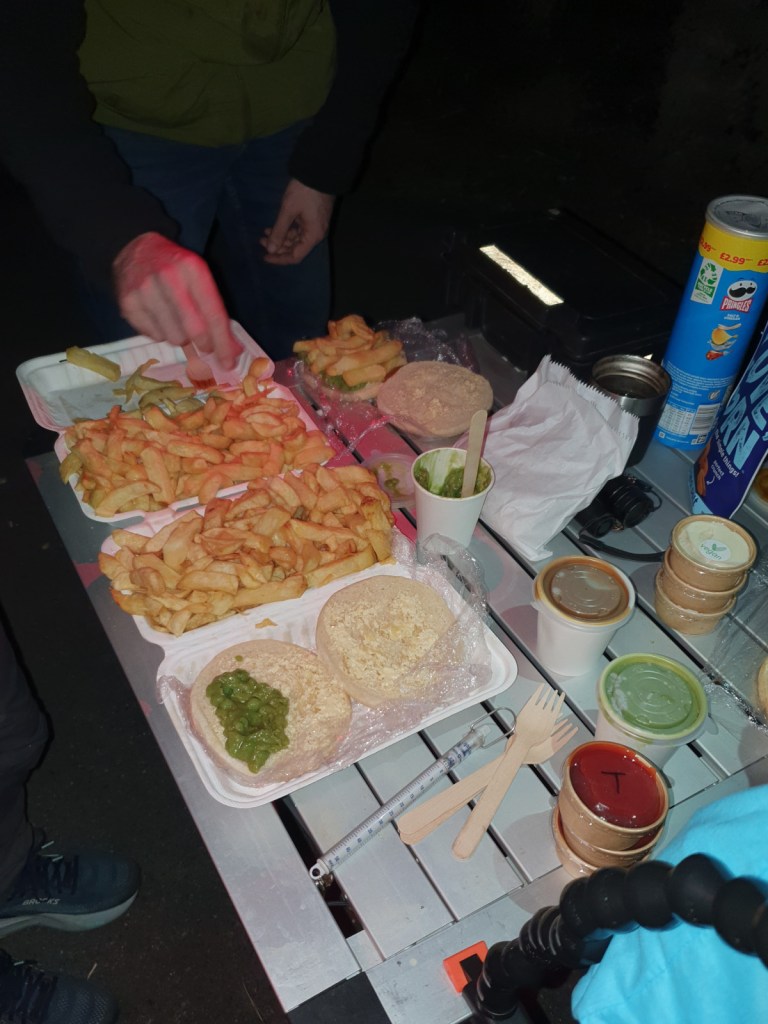
We did make a final visit to our original successful site at Huntspill, but the has been an awful lot of security lighting erected since we were there last and the lack of bat activity was noticeable and we only caught a soprano pip and a BLE all night. Dan did treat everyone to a chippy tea though as part of Ellie’s education on northern diets, so she can at least add that to her CPD.
We’re now looking forward to next summer when we can try and track down GLE in other target areas in Somerset and hopefully eventually find those elusive females.”
Bat Box checks
Josh has been really busy in September leading Bat Box checks:
- On the 5th at RSPB Ham Wall, a total of 33 boxes were checked with a massive total of 66 Soprano Pipistrelles found. Showing how important these boxes are for this species on the levels.
- At Great Breach Wood near Street on the 12th, a total of 21 Natterers were found, 20 in an old wooden square boxes, and one lonely one in a Schwegler 2F. Sopranos and a Noctule were found in other boxes.
- The visit to Kings Castle Wood near Wells was less successful, with only one single male Soprano Pipistrelle in the 22 boxes checked. However several did have bat droppings inside.
Charlton Mackrell Big Bat Count – 11th Sept 2026
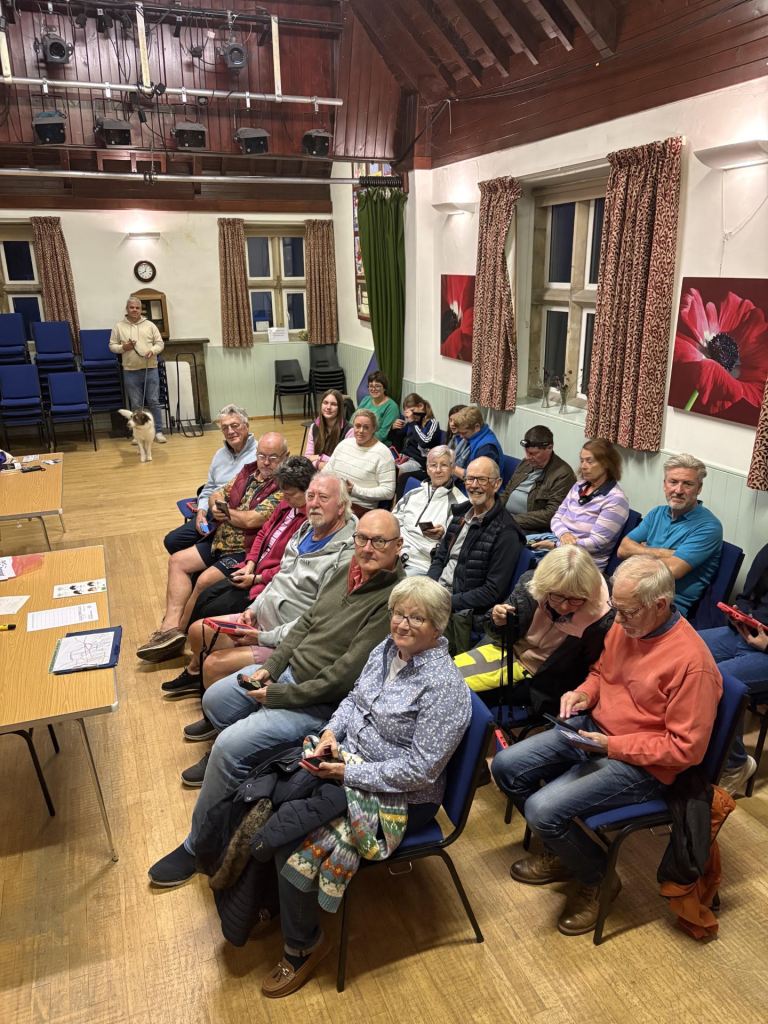
Our final Big Bat Count of the year was run by group member Dave in Charlton Mackrell. and he reported a “very successful bat count at the Charltons last night – lots of people and lots of bats.“
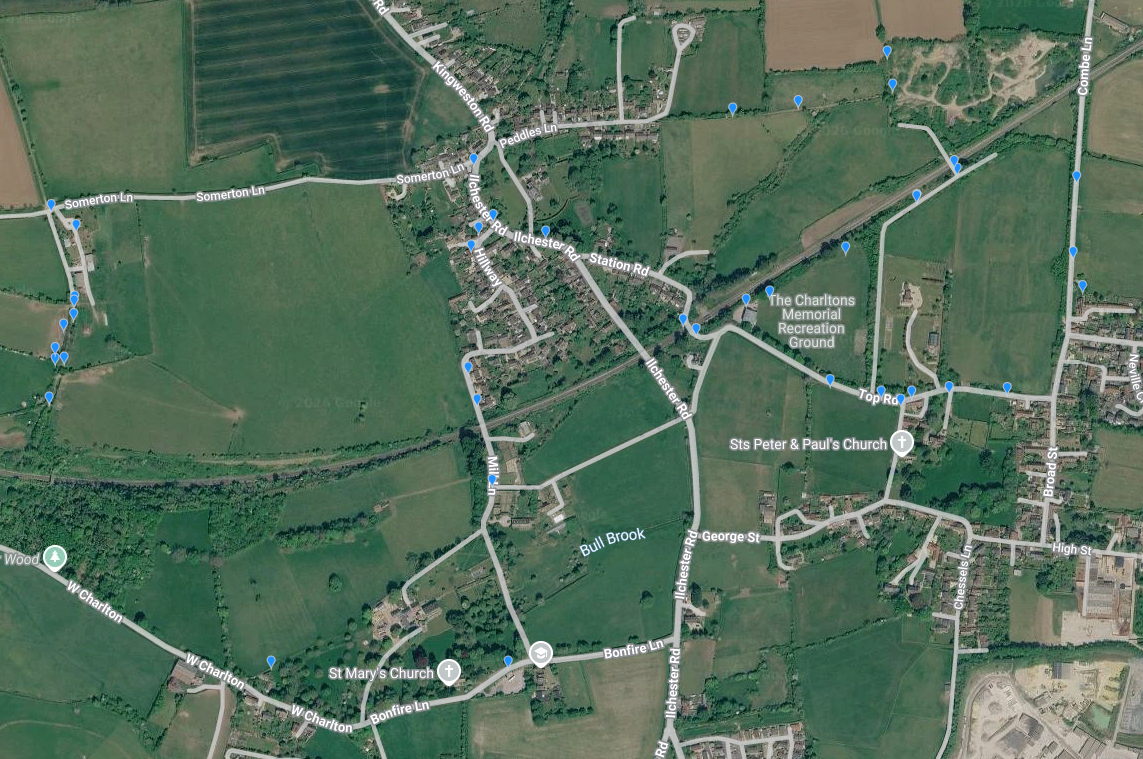
Six teams set off to survey the Charlton Adam and Mackrell. A total of 61 unverified observations were made across 9 species. Common Pipistrelle were the most commonly seen, then Serotine and Soprano Pipistrelle.
Initial unverified observations from the night of 11th Sept 2026 are in iNaturalist:
- Bat Map produced on the night of the unverified observations
- Species observed during the Charltons Big Bat Count 2026
The recordings made on the night have now been downloaded and initial analysis done. There were a total 269 bat passes recorded across a possible 11 species. The majority being Common Pipistrelle (77%) then Soprano Pipistrelle and Serotine (both 7%).
There were also small numbers of :
- Natterer’s
- Daubenton’s
- Lesser Noctule (Leisler’s)
- Barbastelle
- Nathusius’ Pipistrelle
- Bechstein’s
- Noctule
- Brown Long-eared
All of the above will need more verification.
Bat Detector Making Workshops
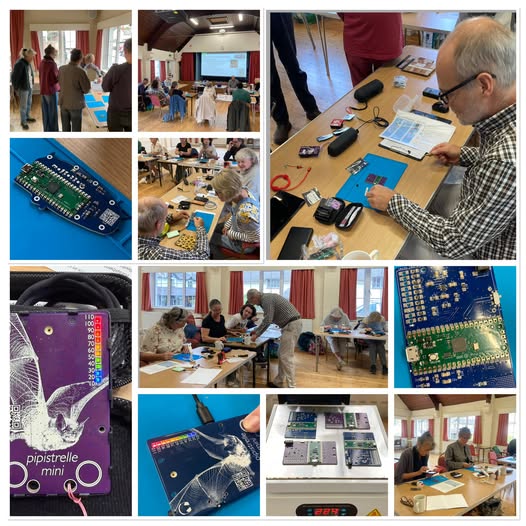
Another busy month for Bat detector making, saw us venture west to lead workshops for the Devon bat Group, and the worlds first PippyG-athon!
Sarah Butcher from the Devon Bat group reports:
“What a brilliant day! Thank you to the Somerset Bat Group for running an excellent day of bat detector-making workshops for Devon Bat Group. Seventeen of us made a mix of Pipistrelle mini and Griff bat detectors, right from learning how to dry-position components to soldering and testing our new detectors.
It was lovely to hear the happy buzz of conversation, the looks of concentration and seeing people making new friends as well as detectors. Everyone went home with at least one detector (some of us with two!) and lots of us wanting a chance to make another one when there were so many different ones to choose between!
Thank you Andy for running such super back to back sessions, and to Bat Conservation Trust’s Connecting People and Landscapes project for generously providing the hall for us. I think today counts as one of our best bat group days yet!”
Later on, we held the worlds first PippyG-athon and the Somerset Earth Science Centre on Sat 3rd October. The idea was to keep building the static ultrasound recorders PippyG, until everyone had built as many as they wanted! In the end time got the better of us so two recorders was the maximum managed, but a great day was had by all.
Bat Worker’s Forum 2026
Booking is now open for the Bat Worker’s Forum 2026! The Bat Workers Forum (BWF) is an annual meeting held online open to anyone interested in bats, regardless of whether the interest is professional or voluntary and regardless of experience.
Next meeting will be held on 22 October 2026 from 7pm – 8:30pm. Registration is now open – click here to book
We will be continuing with the new format for the Bat Workers Forum with updates and supporting documentation gathered in advanced and circulated to attendees in advance as well as added to the website. The event will have shorter presentations and more time for discussion. This change aims to allow more views to be shared on topics covered in the updates and for any further items to be raised during the event.
The aims of the forum are to:
- Facilitate communication and the sharing of experience between all bat workers and those interested in bats, regardless of knowledge or experience
- Enable the concerns, views and opinions of bat workers, bat groups and anyone interested in bats to be shared and discussed and, where relevant, communicated through to BCT and SNCOs
- Enable feedback, from the relevant parties (e.g. BCT or SNCOs) on issues previously raised
- A roundup of major issues and/or highlights from attendees
Attendance
The meeting is chaired by a member of BCT’s Board of Trustees and several members of BCT staff (including representatives from the National Bat Helpline and BCT’s senior management team) attend. Representatives of the UK’s Statutory Nature Conservation Bodies (SNCBs) are encouraged to participate, as are representatives from other organisations where appropriate.
The event is free to attend, with the option of adding a donation to support bat group work via the Partner Group Support Fund which provides grants to support bat group projects and bursaries for attendance at the National Bat Conference.
To enable raising of views, there is the opportunity to submit priorities or things of concern during the booking form. This question is removed from the booking form in advance of the event to enable responses to be gathered. Booking remains open until the day.
For further details and booking link, see: https://www.bats.org.uk/our-work/conferences-symposia/bat-workers-forum
Best wishes, Dan Bryant, Bat Groups Officer, Bat Conservation Trust
Leisler’s and long-eared bats project
We received the following update from this project:
Thank you to everyone who joined our webinar on informing recovery actions for Leisler’s, Brown long-eared and Grey long-eared bats. It was great to see so much interest, and we really appreciated the questions and local knowledge shared.
We are now moving into the fieldwork phase and are identifying the roosts we will monitor over the coming seasons, particularly for this coming hibernation season. This is where we would love your help and thank you to those who’ve already filled in the form with potential locations.
What we are looking for:
We are looking for any data that could be shared of occurrence/ roost records of three species which will help with understanding what these bats need within the landscape. We would welcome any data, which could be sent via email. If you would rather talk it through first, or if you need to check with your bat group, trustees or a landowner before offering data or a site, just reply to this email.
Additionally, we would like to hear about hibernation or maternity roosts of any of the three species, and where you (or a landowner you have a good relationship with) would be willing to support access. In particular:
- Roosts where you would be happy to place a small temperature and humidity logger, which we will post out to you, with training and support provided or facilitate access for us to place monitors and audio detectors.
- Sites that look suitable for bats but do not appear to be used, which will help us understand what makes a roost suitable.
- Help approaching landowners, or introductions, where you have an established relationship.
Please use our short online form to propose a roost: From microhabitat to landscape – informing recovery actions for Leislers, BLE & GLE. – Fill in form
A note on data
We will not publish exact roost locations. Results will be reported at coarse grid-square level, and we are happy to put data sharing agreements in place with groups and individuals. We will also work alongside the Bat Conservation Trust and the National Bat Monitoring Programme to avoid duplicating existing monitoring and to keep disturbance to a minimum.
Training and support
We will run webinars on deploying the loggers and audio detectors, and once sites are confirmed we can also travel to visit bat groups to give a talk and some hands-on set-up training.
We are also glad to hear of sites in Wales and Scotland. Our funding is for England, but we will include these where we can, all spatial data is valuable so any records will be accepted.
If you missed the webinar or would like the recording or transcript to share with your group, just let us know. I’ve attached the slides to this email.
Thank you again for your interest and support. We look forward to hearing from you.
Kind regards, Dr Eleanor Harrison & Dr Christian Devenish, Keele University
Bat group bulletin
The latest BCT Bat Group Bulletin includes a Bats & Health update.
All past editions of the Bulletin can be found on this page of our website:
Membership renewal time
This is the final reminder for members who last joined in 2025 to re-join the bat group now. We will drop those who don’t renew from our mailing lists. There are currently 48 members who last paid membership in 2025.
We will send an email to each member detailing your current membership status, so please check your inbox (and spam).
It costs just £5 per household to rejoin the bat group (free for students/unwaged), and your renewed membership would then run until our April 2027 annual meeting, on 17th April 2027.
For regular members, you might like to consider taking out lifetime membership, which is just £50 per household.
Please pay your membership subs by BaCs or Paypal. Then:
- If your details have changed, then complete our online membership form to update your information.
- OR, if nothings changed, simply just drop us an email to let us know you have paid.
Full details on our website: https://somersetbat.group/join/